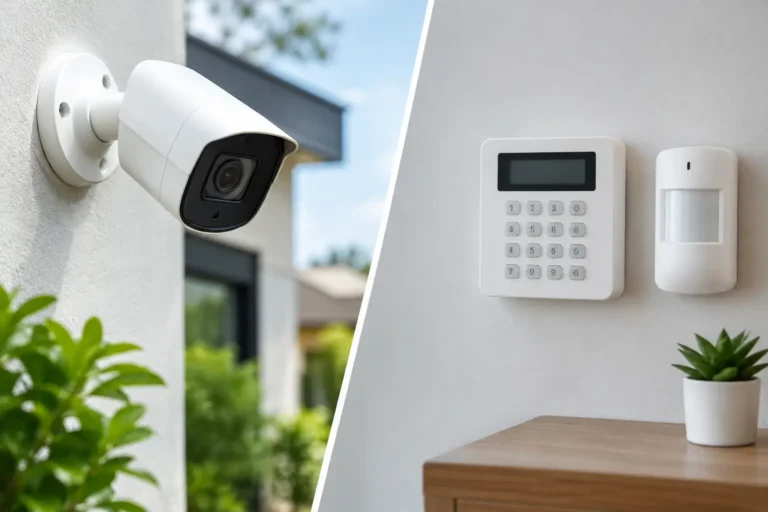
A camera may show you who approached the back door. An alarm can alert you that the door was opened. When comparing security cameras versus alarm systems, that difference matters because seeing an event and getting help during an event are not the same thing.
For homeowners and business owners in Louisiana, the right choice depends on what you need to protect, how quickly you need to know about a problem, and whether someone is available to respond. Many properties benefit from both systems, but one may deserve priority based on your risks, budget, and daily routine.
Security Cameras Versus Alarm Systems: The Core Difference
Security cameras are built to provide visibility. They capture video around entry points, parking areas, sales floors, driveways, gates, and other locations where activity matters. Depending on the system, you may view live footage, receive motion alerts, review recorded clips, and check on your property from a mobile device.
Alarm systems are built to detect and report threats. Door and window contacts, motion detectors, glass-break sensors, panic buttons, and other devices can recognize unauthorized entry or an emergency condition. With professional monitoring, a signal can be reviewed and acted on even when you are asleep, at work, or out of town.
A camera answers, “What happened?” An alarm system answers, “How do we know something is happening right now?” Both questions are valuable, but they serve different purposes.
What Security Cameras Do Best
Cameras create awareness. A homeowner can check whether a package arrived, see when children get home, or confirm who is at the front door before answering. For a business, video can help managers review deliveries, monitor customer traffic, investigate an incident, and keep an eye on entrances after closing.
Visible cameras can also discourage some opportunistic behavior. A clearly installed camera tells visitors and potential intruders that activity may be recorded. Still, cameras should not be treated as a guarantee that someone will leave or that authorities will be called. Their strongest value is documentation and visibility.
When cameras are the better first investment
Cameras may be the most practical starting point when your main concern is activity outside the building or in a specific area. A rural home with a long driveway, a business with a parking lot, or a property owner managing a vacant building may need reliable visual coverage first.
They are also useful when there is a recurring question that video can answer: Was the gate left open? Did a delivery arrive? Which employee opened the storage room? Did someone enter the side entrance after hours?
Camera placement is just as important as camera quality. A camera mounted too high, pointed into direct sun, or blocked by landscaping may produce footage that is less useful than expected. Professional installation helps ensure coverage is designed around entrances, lighting, angles, recording needs, and local conditions such as heavy rain and storm-related power interruptions.
What Alarm Systems Do Best
An alarm system is designed for immediate awareness and response. When a protected door opens, a window is breached, or a motion detector senses movement inside an armed area, the system can sound a local alarm and send a signal to a professional monitoring center.
That response path is the key advantage. Video notifications are easy to miss when your phone is on silent, you are in a meeting, or you are sleeping. A monitored alarm system provides another layer of attention when you cannot watch an app yourself.
For families, alarms can protect the most vulnerable times of day: overnight, during school hours, and while traveling. For businesses, they help protect facilities after employees leave and can provide useful opening and closing activity reports.
When an alarm should come first
An alarm system often deserves priority when the central concern is unauthorized entry, especially at night or when a property is empty. Homes with several accessible doors and windows, businesses with inventory, and offices handling sensitive equipment all benefit from detection that does not depend on someone watching a video feed.
Alarms can also support life safety. Devices such as monitored smoke, carbon monoxide, and flood sensors can alert occupants and monitoring professionals to hazards that a traditional security camera cannot detect. The available devices and recommended setup depend on the property and the risks involved.
Why Many Properties Need Both
The most dependable security plans combine detection, visibility, and response. An alarm system can notify you that a protected opening was triggered. Cameras can help you see what caused the event. Together, they give homeowners and business operators clearer information during stressful moments.
Consider a retail store after closing. A door contact signals that a rear entrance has opened. Interior and exterior cameras provide visual context. The business owner can review activity remotely while professional monitoring follows established procedures. Each component has a distinct role, and neither replaces the other.
At home, the same approach can be simpler but equally useful. A monitored alarm protects doors, windows, and interior spaces. A video doorbell or exterior camera lets you check visitors, deliveries, and driveway activity. Smart controls can make it easier to arm the system, receive alerts, and manage security around daily routines.
Cost Is More Than the Equipment Price
It is reasonable to compare upfront equipment costs, but that number alone does not tell the full story. A low-cost camera can be frustrating if it has poor night visibility, unreliable notifications, limited recording, or difficult installation. An alarm system without a thoughtful design may leave important areas unprotected or create unnecessary false alarms.
Professional installation is especially valuable for properties with multiple buildings, difficult wiring, large exterior areas, or commercial operations. It helps avoid common problems such as weak wireless coverage, poorly positioned cameras, unprotected secondary doors, and equipment that is difficult for staff or family members to use.
Monitoring is also a continuing service, not just a feature on a device. The value comes from having trained professionals available to receive alarm signals and follow the appropriate response procedures. For many customers, that support is the difference between owning security equipment and having a dependable protection plan.
Questions to Ask Before You Choose
Start with the risks that concern you most. Are you trying to deter trespassing, document activity, protect against break-ins, supervise a business location, or receive help during an emergency? The answer will point you toward cameras, alarms, or a combined system.
Next, think about the moments when no one can actively monitor the property. If your home is empty during the day or your business closes overnight, professional alarm monitoring becomes more valuable. If you need to identify vehicles, visitors, or activity around the property, camera coverage deserves careful attention.
Finally, consider who will use the system. A security setup should be easy enough for family members, employees, and managers to operate confidently. Clear training, responsive technical support, and a provider who can service the system after installation are worth considering from the beginning.
Local Planning Makes a Difference
A Louisiana security plan should account for the property itself, not rely on a one-size-fits-all package. A Baton Rouge home may need coverage for a detached garage, backyard gate, and busy street-facing driveway. A small business may need controlled access at employee entrances, video at cash-handling areas, and alerts tied to opening and closing schedules.
Alarm Center Security has designed and supported more than 10,000 systems since 1985. That local experience helps turn a broad goal like “I want to feel safer” into practical decisions about sensors, cameras, monitoring, smart controls, and installation.
The best next step is not to buy the most devices. It is to identify the moments when protection matters most, then build a system that can see, detect, and respond when you need it to.