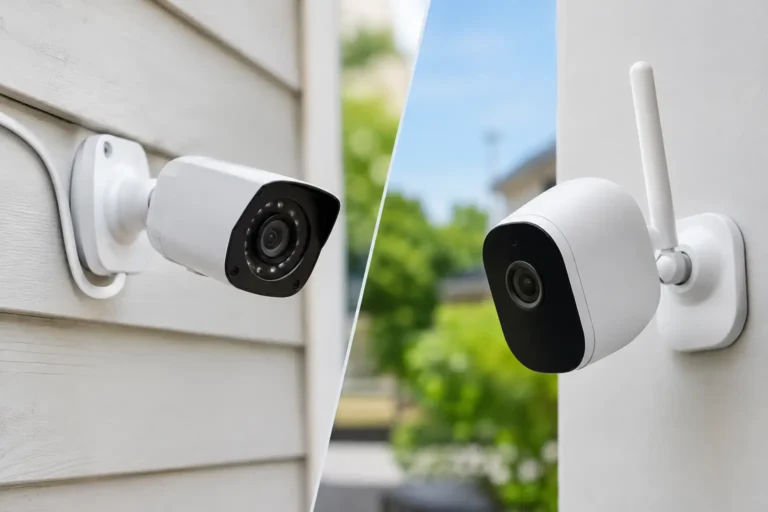
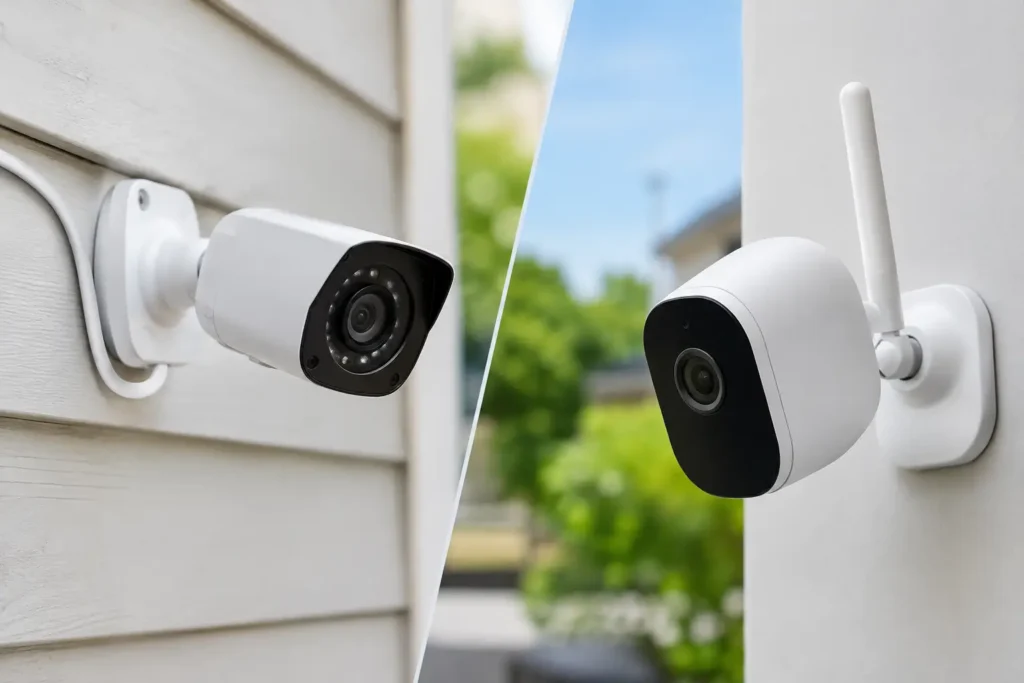
A camera at the front door is only useful if it records when it matters. That is the real question behind wired cameras versus wireless cameras: not which option has the flashiest features, but which system will reliably protect your home, family, employees, or property through daily use, bad weather, and unexpected events.
For Louisiana property owners, camera selection also involves practical details such as placement, building construction, Wi-Fi strength, power availability, and how much coverage you need. Both wired and wireless cameras can be effective. The better choice depends on the property and the level of protection you expect.
Wired Cameras Versus Wireless Cameras: The Core Difference
A wired security camera is connected to the recording equipment by a physical cable, typically an Ethernet cable. Many professionally installed systems use Power over Ethernet, or PoE, which sends power and video data through one cable. The camera remains connected to a network video recorder, allowing footage to be stored locally and viewed remotely when the system is connected to the internet.
A wireless camera sends video over Wi-Fi or another wireless signal. It still needs power, either from a nearby outlet, a rechargeable battery, or a solar panel. “Wireless” usually describes the camera’s video connection, not a camera that operates without any wiring or maintenance.
That distinction matters. A wireless camera may be quick to place in a useful location, while a wired camera generally offers a more permanent connection for areas where continuous coverage is essential.
When Wired Cameras Are the Better Choice
Wired cameras are often the right fit for homeowners and businesses that want dependable, around-the-clock coverage. Because they do not rely on a Wi-Fi signal to transmit video, they are less affected by network congestion, weak signal areas, or wireless interference.
This can be particularly valuable for a business entrance, cash-handling area, warehouse, parking lot, gate, or loading area. These locations may need clear footage throughout the day and night, with no concern about a battery needing to be charged. A wired system can also support more cameras without putting the same demand on the property’s Wi-Fi network.
For many larger homes, wired cameras make sense around driveways, rear yards, detached garages, and perimeter areas. Professional installation allows cables to be routed cleanly and equipment to be positioned for useful views rather than simply where a Wi-Fi signal happens to reach.
Benefits of a wired system
The primary benefit is reliability. A hardwired connection supports consistent video transmission and continuous recording options. Local recording can preserve footage even if the internet goes down, depending on the system design.
Wired cameras also tend to be easier to scale for properties that need broad coverage. Adding cameras to a properly planned system is often more practical than placing numerous Wi-Fi devices throughout a building. For commercial customers, a centralized recorder can make reviewing video, managing cameras, and maintaining retention periods more straightforward.
The trade-off is installation. Running cable through walls, ceilings, attics, or exterior routes requires planning and professional workmanship. It may involve a greater upfront investment than placing a few battery-powered cameras, especially in an existing building. For areas under construction or undergoing renovation, however, installing camera wiring before walls are finished can be a smart long-term decision.
When Wireless Cameras Make Sense
Wireless cameras are a practical option when running cable would be difficult, disruptive, or unnecessary. A homeowner may want an additional view of a side gate, patio, or detached structure without opening walls or adding extensive wiring. A small business may need a camera in a temporary area or a location where an electrical connection is already available but network cabling is not.
Many wireless models offer motion-triggered clips, mobile alerts, two-way audio, and remote viewing. These features can provide meaningful awareness when someone approaches a door, enters a defined area, or moves around the property after hours.
Wireless cameras can also be a good complement to a wired system. For example, a property may use hardwired cameras for permanent exterior and interior coverage while adding a wireless camera where a temporary concern arises. The decision does not always have to be one technology or the other.
What to consider before choosing wireless
Wi-Fi coverage is the first consideration. A camera at the edge of a house or deep inside a metal-framed commercial building may have a weak signal, leading to delayed alerts, reduced video quality, or missed recordings. Before selecting locations, test signal strength where each camera will be installed.
Battery-powered cameras require regular attention. Frequent motion activity can drain batteries faster, and a camera cannot protect an area while it is offline for charging. Solar charging can reduce that burden in a suitable outdoor location, but it depends on available sunlight and proper placement.
Wireless cameras also depend more heavily on the property’s internet and Wi-Fi equipment for remote use. A dependable router, thoughtful network setup, strong passwords, and timely software updates are part of keeping the system operating as intended.
Compare Reliability, Video Storage, and Maintenance
The best camera system is not measured only by picture quality. It should capture usable footage, store it for an appropriate period, and remain manageable for the people responsible for the property.
With wired cameras, video can be continuously recorded to a local network video recorder. This is valuable when you need to review an incident that was not detected by motion settings, such as a vehicle passing through a parking lot or activity near a rear entrance. Local storage can provide more control over retention, though the recorder itself should be installed in a secure location and supported by appropriate backup practices.
Wireless cameras often rely on motion-based recording and may use cloud storage, local storage, or both. Motion recording can be efficient, but camera settings need to be adjusted carefully. A camera that is too sensitive may produce a stream of unnecessary alerts. One that is not sensitive enough may fail to capture activity soon enough.
Maintenance is different for each approach. Wired systems benefit from periodic lens cleaning, recorder checks, and review of camera views as landscaping or building layouts change. Wireless systems need those same checks, plus battery monitoring, Wi-Fi testing, and attention to signal quality. Neither option should be installed and forgotten.
Choosing Cameras for a Louisiana Property
Louisiana heat, humidity, rain, and storm conditions should influence equipment and installation choices. Outdoor cameras need weather-rated housings and secure mounting. Camera placement should avoid glare from direct sun, reflections from exterior lights, and obstructions such as growing trees or seasonal decorations.
At a home, begin with the places that affect daily safety: primary doors, driveways, garages, rear entries, and areas where packages or vehicles are visible. At a business, focus on entrances, points of sale, inventory areas, employee-only doors, receiving zones, and parking areas. The goal is not to cover every inch of a property. It is to create useful visibility at the places where an event is most likely to occur.
Privacy also deserves attention. Cameras should be positioned to protect your property without unnecessarily recording neighbors’ private spaces. Indoors, clearly communicate camera use to employees and follow applicable laws and workplace policies.
Why Professional Design Makes a Difference
A camera can have excellent specifications and still perform poorly if it is mounted too high, aimed at the wrong angle, or installed where the network cannot support it. Professional planning looks at the full picture: lighting, entry patterns, cable routes, recorder placement, internet access, remote viewing needs, and future expansion.
Alarm Center Security has served Louisiana communities since 1985, and a professional assessment can help determine whether wired, wireless, or a hybrid camera system fits your property. The right recommendation should be based on your building and priorities, not a one-size-fits-all package.
If you are uncertain where to begin, identify the one area where better visibility would give you the most peace of mind. A thoughtful camera plan can grow from there, with dependable coverage built around the way your home or business actually operates.