A security alarm can send a signal in seconds, but alarm dispatch timing is more than a stopwatch. From the moment a sensor is triggered, the system, monitoring center, account information, and local emergency response process all play a role. Knowing what happens after an alarm helps homeowners and business owners choose the right protection and set realistic expectations when every moment feels urgent.
What Alarm Dispatch Timing Really Means
Alarm dispatch timing is the sequence between an event at your home or business and a request for emergency response. It may begin with a door contact opening, a motion detector sensing movement, a panic button being pressed, or a fire or environmental device detecting a hazard.
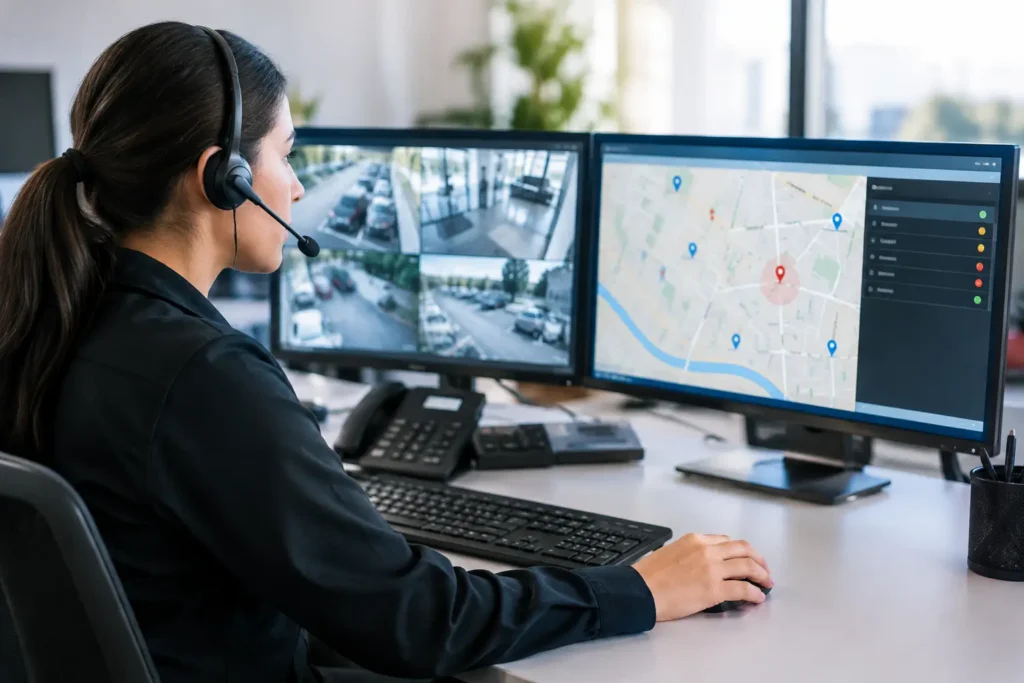
A professionally monitored system sends that event to a monitoring center through its available communication path, such as cellular service, internet service, or a combination of both. The monitoring center receives the signal, identifies the account and alarm type, follows the response instructions on file, and contacts the appropriate people or authorities when the situation calls for it.
The key point is that an alarm signal and an emergency dispatch are not always the same thing. A signal must be received, interpreted, and handled according to the response plan for that account. That process is designed to support a dependable response while reducing avoidable false alarms.
The Steps Between an Alarm and a Dispatch
Every monitored account has its own details, but the basic process generally follows a clear path.
The system detects an event
Your security system is the first link in the chain. When a protected point is opened or a device detects activity, the control panel records the event and communicates it to the monitoring center. This is why professional installation matters. Sensors need to be placed correctly, programmed accurately, and tested as a complete system rather than treated as a collection of individual devices.
For a business, the event might be an after-hours intrusion alarm. For a homeowner, it could be a perimeter alarm while the family is away, or a smoke detector that activates overnight. The event type determines how the monitoring center handles the signal.
The monitoring center receives and reviews the signal
Once the alarm reaches the monitoring center, trained operators use the information connected to that account. They can see the alarm type, the property address, contact numbers, emergency contacts, and account instructions. Clear, up-to-date account records help prevent delays caused by incorrect phone numbers, outdated passcodes, or missing location details.
Some events may trigger an immediate response process. Others may include verification steps based on the type of alarm, local requirements, and the instructions established for the account. Monitoring procedures are built to treat an alarm seriously while recognizing that a signal can sometimes come from an accidental entry, a forgotten code, a pet, a damaged sensor, or user error.
Contacts and authorities are notified as appropriate
When verification calls are part of the response plan, the monitoring center contacts the people listed on the account. If the alarm appears to be an emergency, cannot be resolved, or meets the established dispatch criteria, the operator contacts the appropriate emergency agency.
After that point, actual arrival time is controlled by the responding agency. Police, fire, and medical responders must prioritize calls based on the information available and the urgency of other active incidents. A security company cannot guarantee a specific police or fire response time, but a properly designed and professionally monitored system ensures that a critical event is communicated without relying on someone nearby to notice it first.
Why Alarm Dispatch Timing Can Vary
It is natural to want one exact answer to the question, “How fast will help arrive?” The honest answer is that it depends. The alarm transmission itself may be rapid, but the full response timeline can vary based on several real-world factors.
Communication reliability is one factor. Cellular backup can help maintain alarm communication if internet service goes down, while a system that depends on a single connection may be more vulnerable during an outage. Equipment condition matters, too. Low batteries, damaged devices, weak signal paths, and untested equipment can all create problems at the worst possible time.
Account information also affects the process. If the monitoring center reaches the wrong number, encounters an outdated call list, or cannot confirm the correct address for a property with multiple entrances or buildings, valuable time can be lost. Businesses with frequent staff changes should review their authorized users and emergency contact lists regularly.
Local requirements can play a role as well. Many communities have alarm permitting rules or false-alarm ordinances. These policies are intended to help emergency resources remain available for genuine emergencies. Understanding the requirements for your parish or municipality is part of responsible alarm ownership.
Finally, emergency agency response depends on call volume, weather, road conditions, staffing, and the seriousness of concurrent incidents. In Louisiana, severe weather can affect both power and travel conditions, making tested backup communication and accurate emergency information especially valuable.
How to Support a Faster, More Reliable Response
The best way to improve alarm dispatch timing is not to focus on one number. It is to remove avoidable points of failure before an emergency occurs.
Start with system design. A professional should assess the entry points, layout, daily routines, and risk areas of the property. A home may need strong perimeter protection, interior detection, life-safety devices, and smart alerts. A business may require intrusion detection, video coverage, access management, opening and closing reports, and separate permissions for managers and employees.
Keep your contact information current. Update the monitoring provider whenever phone numbers, emergency contacts, keyholders, business hours, or access instructions change. Make sure everyone who may answer a verification call knows the account passcode and understands how to communicate a real emergency versus an accidental alarm.
Test the system on a regular schedule with the monitoring center. Testing confirms that signals are getting through and gives users a chance to practice arming, disarming, and using the system correctly. It also helps identify issues such as a loose door contact or a low battery before they become a problem.
For commercial properties, create clear opening and closing procedures. Employees should know who is authorized to arm and disarm the system, what to do if they make a mistake, and whom to contact after an alarm. A rushed employee at the end of a shift is one of the most common sources of preventable false alarms.
Monitoring Is Only as Good as the Plan Behind It
A security system should fit the way you live or operate your business. A family with children, pets, and frequent visitors has different needs than a warehouse, medical office, retail store, or new construction project. The right plan balances quick notification and reliable response with practical daily use.
That is where local support makes a meaningful difference. Alarm Center Security has helped protect Louisiana properties since 1985, with more than 10,000 installed systems. Our team can help evaluate your property, recommend professionally installed equipment, set up monitoring instructions, and provide the continuing support needed to keep your system ready.
Smart security tools can add useful awareness as well. Mobile alerts, remote arming and disarming, camera notifications, and activity reports can help you recognize an issue quickly and make better decisions. They do not replace emergency responders or professional monitoring, but they can give homeowners and business owners valuable visibility when they are away.
A Better Question Than “How Fast?”
Rather than asking only how many seconds dispatch will take, ask whether your system will send the right information through a dependable path, whether your monitoring instructions are current, and whether the people responsible for the property know what to do. Those are the details that make a security plan dependable when it matters most.
A professionally designed, monitored, and maintained system gives your home or business a clearer path from detection to response. If you are unsure whether your current system is prepared, a local security review can help you identify practical improvements before the next alarm signal ever occurs.