A dark driveway, side gate, or rear entrance gives an intruder cover and makes routine trips outside less comfortable for your family or employees. Knowing how to automate security lighting means more than adding a bright fixture above the garage. The right plan puts light where it helps most, activates it at the right time, and avoids turning your property into a source of glare for neighbors.
For Louisiana homes and businesses, automation also has to account for heavy rain, humidity, changing daylight hours, insects, and frequent activity around patios, driveways, and parking areas. A professionally designed lighting plan can work alongside your alarm system, cameras, and smart controls to provide better visibility without requiring constant attention.
Start With the Areas That Need Light Most
Security lighting works best when it supports how people actually move around your property. Begin with the approaches and access points someone could use to enter: front and rear doors, garage doors, side gates, windows that are hidden from the street, storage areas, and detached buildings. For businesses, include employee entrances, loading areas, dumpster enclosures, back doors, and parking lots.
Walk the property after dark before choosing fixture locations. Look for shadows created by landscaping, fences, vehicles, rooflines, and outdoor furniture. A light mounted too high may leave the ground directly below it dark. One mounted too low can shine into windows or create harsh glare that makes it harder for cameras and people to see beyond the bright spot.
The goal is useful, even visibility rather than maximum brightness. Well-placed lighting can make it easier for cameras to capture activity, help a family member reach the door safely, and signal that a property is actively cared for.
How to Automate Security Lighting With Smart Triggers
The best automation method depends on the area, the amount of traffic, and what you want the lights to do. Most properties use a combination of schedules, motion activation, and system-based rules rather than relying on one trigger everywhere.
Use schedules for predictable evening coverage
A sunset-to-sunrise schedule is a dependable choice for front walkways, address numbers, entrances, and parking areas. It ensures that key locations are lit when darkness falls, even when your family is away or your business closes early. Smart controls can adjust for changing sunset times, so the lights do not need to be manually reset every season.
Scheduling is especially useful for areas with frequent legitimate activity. If people regularly arrive home after work, take pets outside, or use a business entrance during evening shifts, a low-level lighting schedule is often more practical than lights that switch on and off with every movement.
Use motion sensors for side yards and low-traffic areas
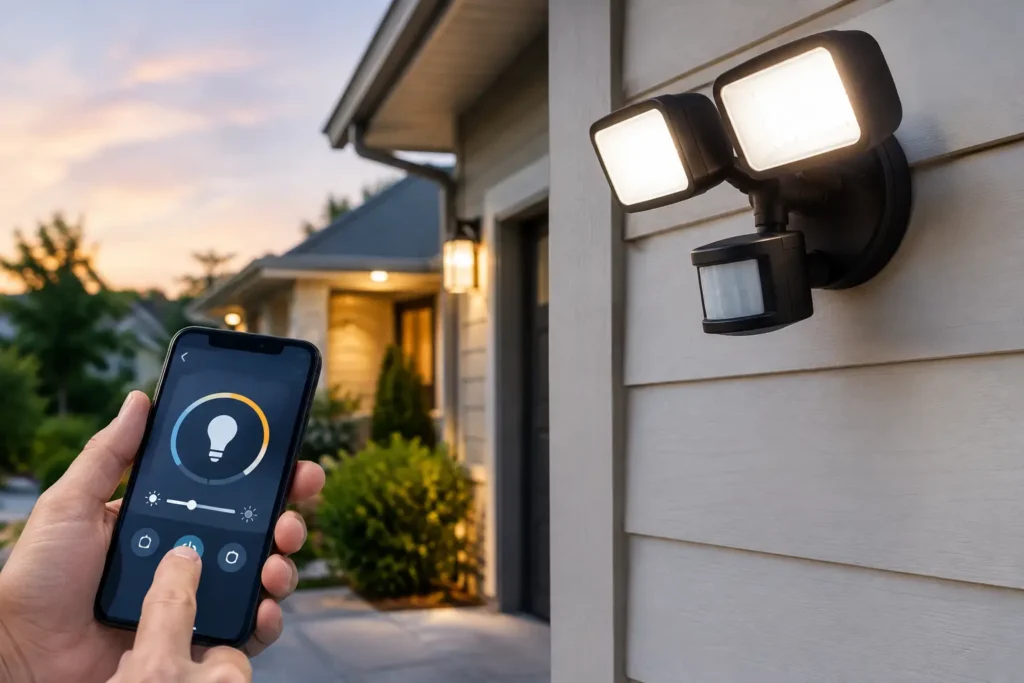
Motion-activated lighting is a good fit for side gates, rear yards, storage sheds, alley-facing doors, and similar locations that do not need continuous illumination. When motion is detected, the lights can come on for a set period, such as several minutes, then turn off automatically.
Sensor placement matters. Aim sensors away from busy streets, swaying tree branches, and areas where pets frequently roam. Otherwise, passing cars, wildlife, or wind can create repeated activations that become frustrating and may cause occupants to ignore a meaningful alert.
Many fixtures let you adjust sensitivity, detection range, and shutoff time. Those settings should be tested after installation, preferably at night, when you can see whether the coverage reaches the intended path without activating from the sidewalk or a neighbor’s driveway.
Connect lighting to your security system and cameras
Smart security lighting becomes more useful when it responds to an alarm event, door activity, or camera detection. For example, exterior lights can turn on when a protected door opens after dark, when a camera identifies activity in a designated area, or when an alarm is triggered. That illumination can help residents see what is happening and improve the camera’s view of the scene.
This approach should be planned carefully. Not every sensor event needs to turn on every light around the property. A garage-side camera event may call for garage and driveway lights, while an alarm event could activate broader exterior lighting. Targeted rules reduce unnecessary light and make the response feel purposeful.
For monitored security systems, lighting automation can complement professional monitoring. It does not replace intrusion detection, emergency response procedures, or cameras, but it can add visibility at the moment it is needed most.
Choose Fixtures That Fit the Location
LED fixtures are usually the practical choice for security lighting because they use less energy, provide bright illumination, and require fewer bulb changes than older options. Look for outdoor-rated fixtures designed to handle moisture and temperature changes. In Louisiana, a fixture that is not properly rated or sealed may fail sooner than expected.
Color temperature affects how the space feels and how well details appear on camera. Cooler white light can provide a crisp, alert appearance around commercial entries and driveways. A more neutral white may be more comfortable around a home’s front porch or patio. The best option depends on the fixture, surrounding surfaces, and camera equipment, so it is worth viewing a sample at night before standardizing on a color.
Avoid installing overly powerful floodlights simply because they seem more secure. Excessive brightness can wash out camera footage, create deep shadows around the edges of the property, and disturb nearby homes. Shielded fixtures aimed downward are often more effective than unshielded lights pointed outward.
Build Rules Around Real Life
Automation should make daily life easier, not create another system to manage. Set up simple rules first, then refine them after a week or two of normal use. A homeowner might schedule the front entry light from sunset until bedtime, keep the driveway light on until dawn, and use motion activation for the side yard. A business might keep parking and entrance lighting on through closing, then switch to motion-activated coverage after employees leave.
Consider temporary changes for vacations, holidays, severe weather, or special events. Smart controls can allow you to check lighting status and make adjustments from your phone, which is helpful when your routine changes unexpectedly. Keep access limited to trusted users and review permissions when employees, tenants, or household members no longer need control.
Power interruptions deserve attention as well. Ask how fixtures, hubs, and smart controls behave after an outage. Some equipment returns to its previous setting automatically, while other devices may require reconnection. A professionally installed system can be designed with dependable equipment and clear guidance on what to expect.
Professional Installation Helps Avoid Common Gaps
Installing a single motion light can be a manageable project. Designing an automated lighting system that works with alarms, cameras, smart locks, and remote control is different. It involves electrical safety, fixture placement, network reliability, automation rules, and the specific needs of the property.
Professional installation can help prevent common problems such as blind spots, nuisance activations, poor camera visibility, lights that shine into bedrooms, and controls that family members or employees find confusing. It also gives you one local team to call when equipment needs adjustment or service.
Alarm Center Security has helped protect Louisiana homes and businesses since 1985. A customized security assessment can identify where automated lighting will provide the greatest benefit and how it can work with your existing or planned security system.
A good lighting plan should feel almost invisible in daily life: the path is lit when you need it, the property responds when something is out of place, and you have clear control without having to think about it every night.