When comparing a local alarm company vs national provider, the monthly price is only one part of the decision. The more meaningful question is who will design your system, install it correctly, answer when you need help, and still be available when your needs change years from now. For Louisiana homeowners and business owners, security is personal. Your provider should treat it that way.
A national brand may offer familiar advertising, broad name recognition, and introductory promotions. A local provider can offer something equally valuable: people who understand the area, take responsibility for the installation, and remain accessible after the contract is signed. Neither option is automatically right for every property, but the differences deserve a closer look before you choose.
Local Alarm Company vs National: The Real Differences
Both local and national alarm companies can provide professionally monitored intrusion alarms, security cameras, smart controls, and mobile alerts. The equipment itself may even be similar. The experience surrounding that equipment is often where the difference becomes clear.
National companies generally operate through centralized sales, installation, billing, and customer service systems. That scale can be useful for customers who prefer a standardized package or who expect to move frequently between markets. However, the person selling the system, the technician installing it, and the representative handling a later service issue may all be different people in different locations.
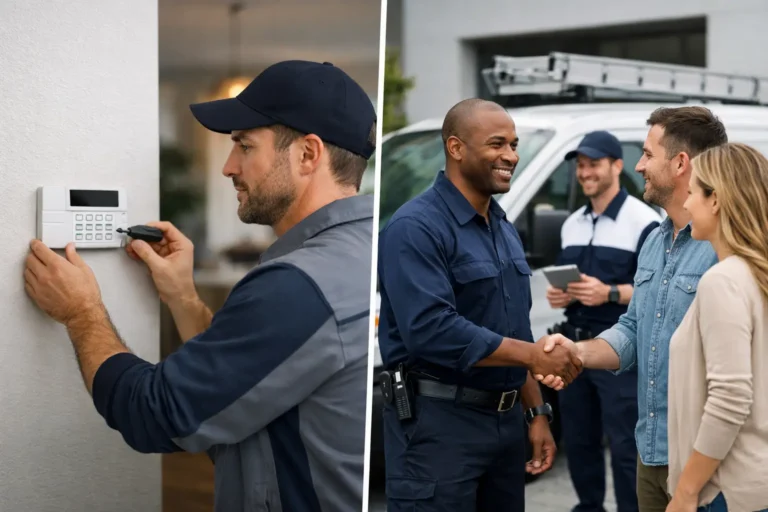
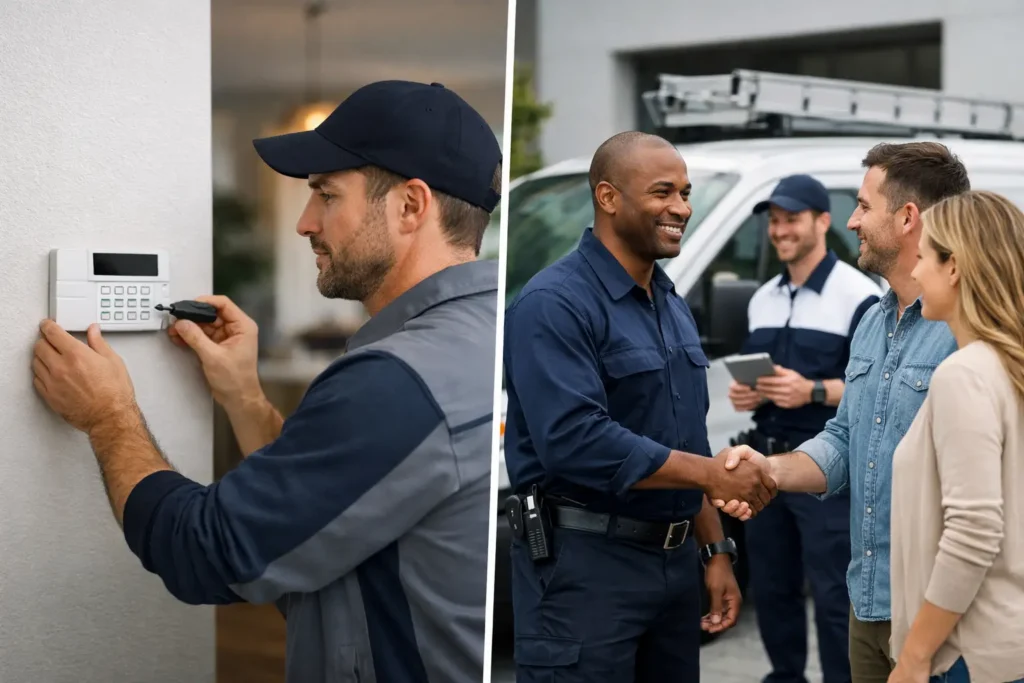
A local alarm company is more likely to build the relationship around your individual property. The same team may evaluate your home or business, recommend protection options, complete the installation, and provide support later. That continuity matters when a camera needs repositioning, a new employee needs access credentials, or your family adds a smart lock, thermostat, or additional sensor.
A Security System Should Fit the Property
A prepackaged system can be a reasonable choice for a small, straightforward space. But many Louisiana properties are not straightforward. A home may have detached buildings, several exterior doors, a pool gate, valuable equipment in a garage, or areas where wireless coverage needs careful planning. A business may need protected stockrooms, multiple entrances, employee access control, camera coverage for parking areas, and opening and closing reports.
Local security professionals can walk the property and identify the details that a phone-based quote may miss. They can discuss how your family uses the home or how your employees move through the building. That creates a more practical plan than simply counting doors and windows.
Professional design also helps prevent two common problems: paying for equipment you do not need and leaving gaps where protection would matter most. A well-designed system balances intrusion detection, video verification, convenience, and budget. It should feel easy to use, not like another complicated system you have to manage.
Professional Installation Is More Than Mounting Devices
Security devices only work as well as their placement, programming, and testing. Cameras need useful viewing angles and appropriate lighting. Motion detectors need to be positioned to reduce false alarms. Door and window sensors need reliable alignment. Smart automation features must be configured so the people who need access can use them confidently.
With a professionally installed system, there is accountability for those details. A technician can confirm that notifications reach the right users, that the control panel communicates properly, and that everyone understands how to arm, disarm, and respond to alerts.
This is particularly important for businesses. A poorly placed camera may fail to capture a face or transaction area. An improperly configured access system can create confusion at opening and closing. Professional installation is an investment in making the system useful every day, not just impressive on a proposal.
Monitoring Matters Most When You Cannot Respond
Many security shoppers focus first on hardware. Yet the monitoring relationship is often what provides real peace of mind. When an alarm occurs while you are asleep, on vacation, or away from your business, trained monitoring professionals can help ensure the event receives attention according to your account instructions.
Ask every provider how monitoring works, what happens during an alarm event, and how easily you can update contacts or response information. Also ask whether local service is available if there is a communication issue, system trouble, or equipment upgrade needed later.
National companies may offer monitoring on a very large scale, while local companies often combine professional monitoring resources with local account support. That combination can be especially reassuring for customers who want dependable protection without being left to sort through automated menus when they need help.
Customer Service Is Tested After Installation
The sales process is usually smooth with almost any provider. The better test is what happens six months or three years later. You may need to replace a phone, update users, adjust camera notifications, change a billing contact, remodel a room, or troubleshoot an unexpected alert.
With a national provider, service may be handled through a central call center and dispatched based on availability. That structure can work well, but it may feel impersonal when the representative does not know your property or account history.
A local company has a stronger incentive to protect its reputation in the communities it serves. Its technicians and support staff live and work near the customers they assist. For many people, knowing they can speak with a real local team is not a small benefit. It is part of what makes a security provider trustworthy.
Alarm Center Security has served Louisiana since 1985 and has installed more than 10,000 systems. That kind of long-term local presence gives customers confidence that the company will be there for installation, monitoring support, upgrades, and the questions that arise as life or business operations change.
Price Should Be Clear, Not Just Low
An advertised introductory rate can be attractive, especially when comparing monthly monitoring costs. Still, homeowners and business owners should look beyond the first offer. Review equipment charges, installation costs, contract length, service visit policies, warranty coverage, cancellation terms, and what the monthly rate includes.
A lower starting price may not remain the lower long-term cost if the system needs upgrades, if service is difficult to obtain, or if important equipment was not included in the original design. On the other hand, a local provider is not automatically the lowest-priced option either. Personalized service and professional installation have value, and that value should be explained clearly.
The right provider should give you a straightforward proposal with no pressure to purchase features that do not solve a real problem. You should understand what is being installed, why it is recommended, and how ongoing monitoring and support will work.
Questions Worth Asking Before You Sign
Before choosing between providers, ask who will install and service the system, whether the equipment can expand as your needs change, and how support requests are handled. Find out what happens if you move, sell the property, add cameras, or need to change authorized users.
For business security, ask about reporting, employee access management, remote viewing, and how the system can support daily opening and closing routines. For homes, ask how security integrates with cameras, smart locks, garage controls, lighting, and other home automation features you may want to use.
Most importantly, ask whether the provider is listening. Good security recommendations start with your concerns, your property, and the people you are protecting.
When a National Provider May Make Sense
There are situations where a national provider may be a practical fit. Someone who relocates often may value a company with service availability across many states. A customer with a simple property and a strong preference for a standardized online purchase may also be comfortable with a national model.
But if responsive local service, a customized plan, and an ongoing relationship matter to you, a local provider is often the stronger choice. That is especially true when protecting a larger home, a new construction project, a business, or a property with needs that go beyond a basic alarm panel.
Your security system should give you confidence at the end of the day, not leave you wondering who to call when something changes. Request a professional assessment, ask direct questions, and choose the team you would trust to answer when protection matters most.