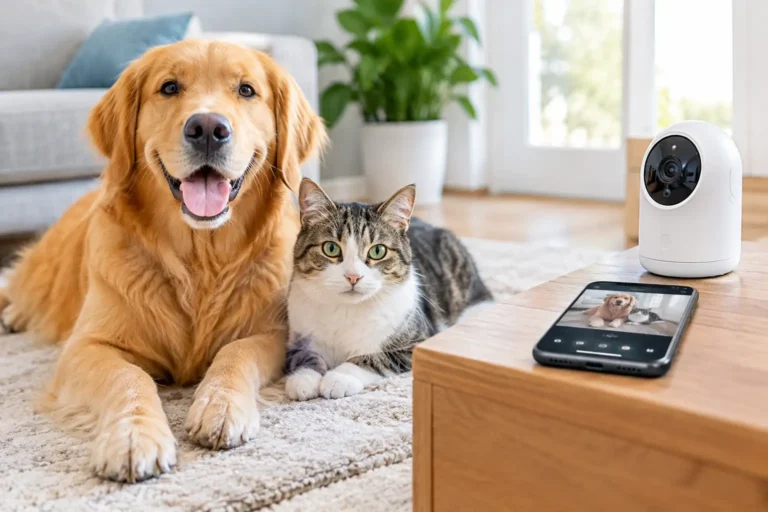
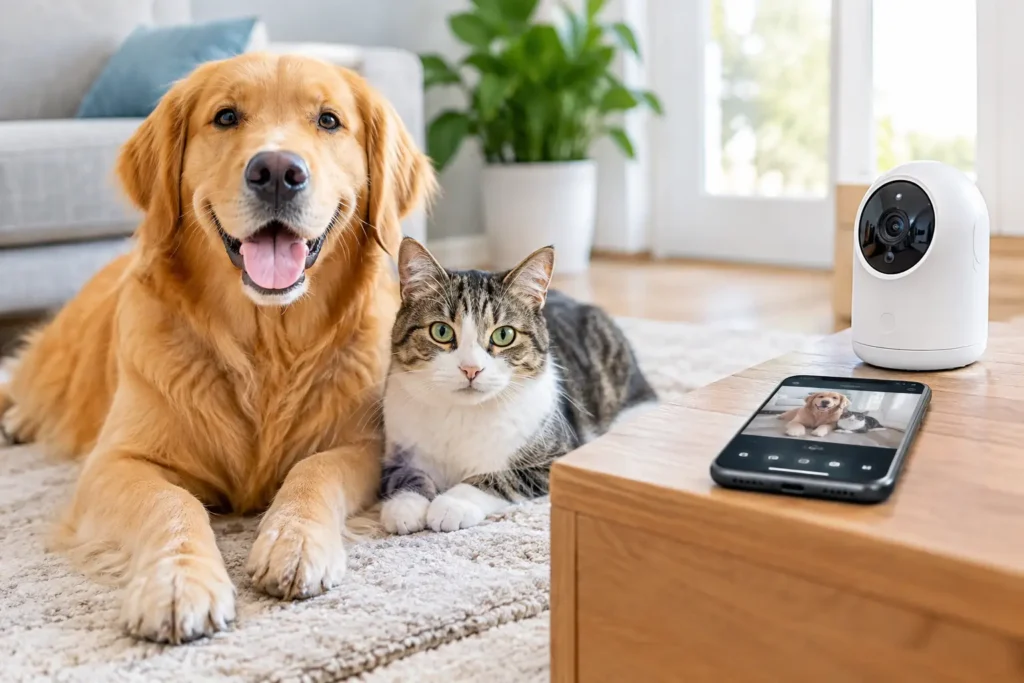
A dog crossing the living room at 2 a.m. should not create the same response as an intruder entering through a door. That simple distinction is why the best alarm features pet owners choose are designed around how a real household moves, sleeps, leaves for work, and cares for animals every day.
For Louisiana homeowners, pet-friendly security is not about turning off protection to avoid false alarms. It is about selecting the right equipment, placing it correctly, and having a local professional configure the system for the way your family lives. Here are the features that make the biggest difference.
1. Pet-Immune Motion Sensors
Motion detectors remain an effective layer of interior protection, but standard sensors are not always a good fit for homes with pets. A cat that climbs furniture, a dog that patrols the hallway, or two pets playing while the family is away can trigger an improperly selected or installed motion sensor.
Pet-immune motion sensors are designed to distinguish between the heat and movement patterns of a person and those of smaller animals. Many models can be configured for pets up to a specified weight, often around 40 to 80 pounds. The correct setting depends on the sensor, the pet, and the room.
Weight is only part of the decision. A 45-pound dog on the floor may be compatible with a pet-immune detector, while a 12-pound cat that jumps onto a bookcase near the sensor may not be. Professional placement matters just as much as the equipment itself. A technician can avoid aiming sensors toward furniture, stairways, pet crates, or other areas where animals frequently climb.
2. Door and Window Sensors for Perimeter Protection
For many pet owners, perimeter protection is the most practical way to keep a home secured while pets are inside. Contact sensors on exterior doors and accessible windows notify the system when an opening is breached, allowing the alarm to respond before someone moves through the house.
This approach has an everyday benefit: you may be able to arm the perimeter while your dog or cat still has room to move freely indoors. That can be especially useful at night, when pets are awake but the household is sleeping, or when you want protection while working from home.
Door sensors also support a concern many pet owners know well: an animal slipping outside. With smart notifications, you can receive an alert if a door opens unexpectedly. That does not replace proper pet supervision, but it adds a valuable layer of awareness when children, visitors, or service providers are coming and going.
3. Smart Alerts That Let You Decide What Needs Attention
A security system should provide useful information, not a stream of notifications that gets ignored. Smart alerts can be customized around the events that matter most to your household, including an armed system being disarmed, a side gate opening, a garage door being left up, or a door opening during a scheduled time.
For pet owners, this is particularly helpful when a dog walker, pet sitter, family member, or neighbor has authorized access. Instead of wondering whether someone arrived or left on time, you can receive a notification and check in from your phone.
The trade-off is notification overload. Receiving an alert every time a busy household opens a door can quickly become frustrating. A thoughtfully programmed system uses schedules, user codes, and selected alert rules so that alerts remain meaningful. It should answer a question you genuinely have, such as, “Did the sitter arrive?” or “Was the back door opened after everyone left?”
4. Security Cameras at the Right Entry Points
Cameras add visibility that an alarm sensor alone cannot provide. A video doorbell can show who is at the front door, while outdoor cameras can help you review activity around driveways, gates, patios, and backyard entrances. Indoor cameras may also be useful for checking on pets, but they should be placed with your household’s privacy in mind.
For a home with pets, cameras are especially useful when paired with alerts. If an exterior door opens when it should not, you can review a clip or view a live image to better understand what happened. You may see a delivery, a family member arriving home, a pet sitter entering, or activity that requires a call for help.
Camera placement should be purposeful. An outdoor camera aimed at the driveway may be more valuable than one covering a large, inactive area of the yard. A camera installed too high, too low, or directly into bright sunlight may miss the details you need. Professional installation helps account for viewing angles, lighting, Wi-Fi coverage, and local weather conditions.
5. Separate User Codes for Pet Sitters and Family
A shared alarm code creates unnecessary uncertainty. If several people use the same code, there is no easy way to know who accessed the home or when. Separate user codes give each authorized person their own access credentials.
This is useful for pet sitters, dog walkers, older children, housekeepers, and trusted neighbors. You can receive a notification when a particular code is used, and temporary codes can be removed when they are no longer needed. That is far safer than leaving a key under a mat or continuing to share a code after a service arrangement ends.
For many families, this feature also simplifies the routine. A pet sitter can enter, feed the animals, and leave without needing a physical key. You can confirm that the visit occurred and return to a properly secured home afterward. The goal is not to watch every trusted person closely. It is to maintain clear, responsible control of access to your home.
6. Professional Monitoring for When You Cannot Respond
A smartphone alert is helpful only if someone sees it and can act. Professional monitoring provides support when you are at work, traveling, asleep, or unable to reach your phone. When an alarm event occurs, trained monitoring professionals follow the response plan for your account and can contact emergency services when appropriate.
This matters to pet owners because a home emergency can affect more than property. A break-in, fire, or carbon monoxide event may leave animals inside when no one is home. Monitored smoke and carbon monoxide detection can provide another layer of protection for everyone under your roof.
Monitoring is not a substitute for evacuation planning. Consider where your pets sleep, keep leashes or carriers easy to reach, and make sure trusted contacts know how to help if an emergency occurs. But monitored protection means your alarm system is not relying only on your availability in a critical moment.
7. Smart Home Controls That Support Daily Routines
Smart home controls can make security easier to use consistently. Through a compatible app, homeowners may be able to arm or disarm the system, check door locks, view cameras, control selected lights, and receive status notifications from one place.
For pet owners, remote control can solve practical problems. Perhaps you left for work and cannot remember whether the garage door was closed. Maybe the pet sitter needs to enter early, or a storm is moving in and you want to check a camera facing the backyard. Smart controls offer convenience, but their best value is confidence that you can check the home without rushing back.
Not every home needs every automation feature. The right system is the one your family will use reliably. A well-designed plan starts with your doors, windows, routines, pets, and concerns, then adds technology where it provides a clear benefit.
Choosing a Pet-Friendly System That Fits Your Home
The best alarm features for pet owners depend on the size and habits of your animals, the layout of the home, and how often others need access. A large dog that stays on the floor requires a different sensor plan than two cats that climb shelves. A family that travels frequently may place more value on cameras and monitored fire protection, while a household with regular pet care visits may prioritize user codes and door alerts.
Alarm Center Security has helped protect Louisiana homes since 1985, with more than 10,000 installed systems. A professional assessment can identify the right sensor locations, reduce false-alarm risks, and build a system around the people and pets you care about. Request a free estimate to discuss a security plan that gives your household protection without asking your pets to change their routine.
The right alarm system should fade into the background of a normal day: your pets can nap, play, and move through the house, while you know the protection around them is ready when it matters.