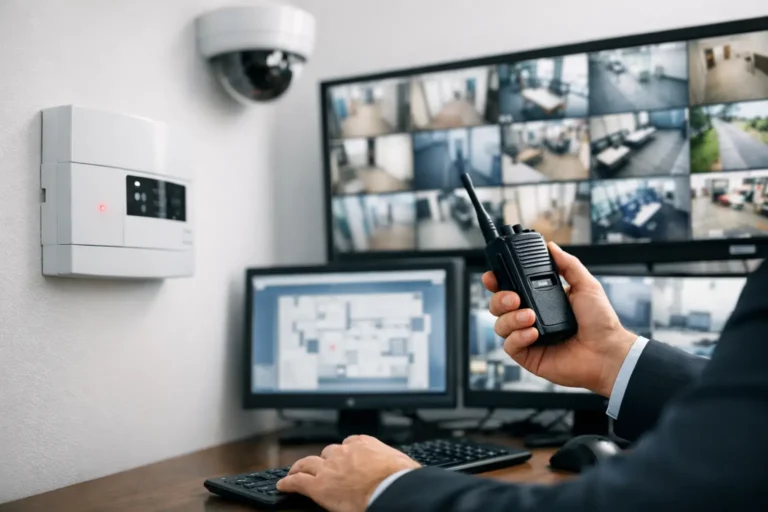
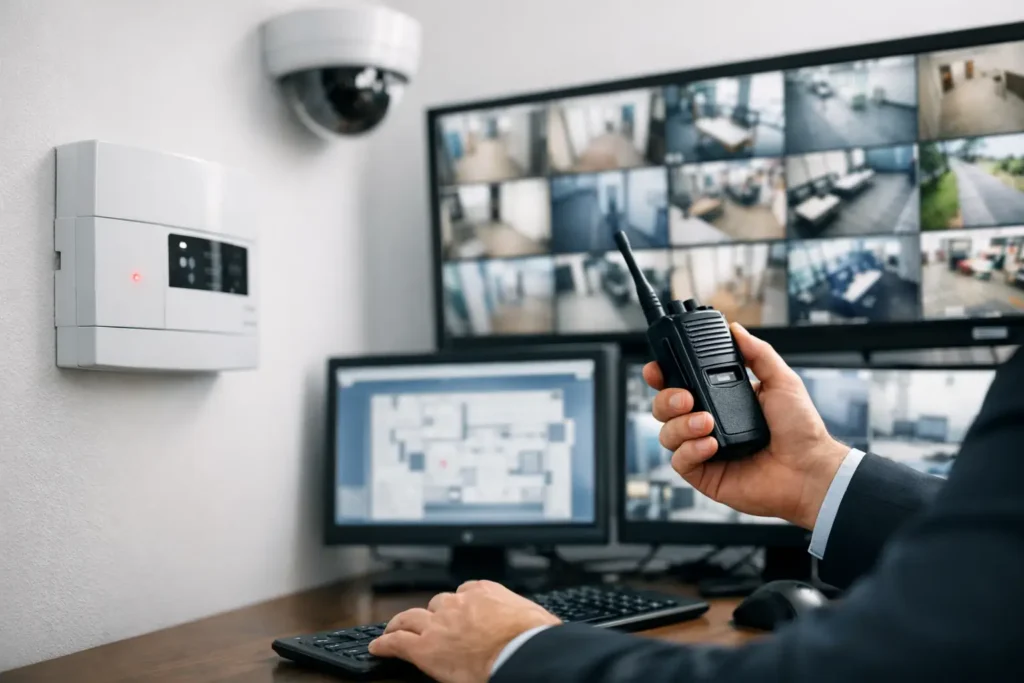
A security system does not do much good if no one responds when it goes off. That is the real answer behind what is alarm monitoring – it is the service that connects your alarm system to trained professionals who can verify activity, contact you, and request help when needed.
For homeowners, that can mean faster action during a break-in, fire, or medical alert. For business owners, it can mean fewer blind spots after hours, better visibility into openings and closings, and more confidence that someone is watching when your building is empty. The system on the wall matters, but the response behind it matters just as much.
What is alarm monitoring and how does it work?
Alarm monitoring is a professional service that keeps watch over signals sent by your security system. If a door sensor trips, a motion detector activates, a panic button is pressed, or a smoke detector goes into alarm, that signal is transmitted to a monitoring center. From there, trained operators follow a set response process.
That process usually starts with reviewing the signal and attempting to contact the property or designated contacts. If the alarm appears legitimate or cannot be resolved, the monitoring center can request police, fire, or emergency medical response based on the type of signal received.
In plain terms, alarm monitoring turns your security system from a noisemaker into an active layer of protection. Without monitoring, a siren may scare someone away, or it may be ignored. With monitoring, there is a clear chain of response.
What happens when an alarm goes off?
The details depend on your system setup, but the sequence is usually straightforward. A sensor detects an event. The control panel sends that signal through a communication path, often cellular, internet, or a combination of both. The monitoring center receives the signal and identifies the account, zone, and event type.
Next, an operator follows the instructions tied to that account. That may include calling the homeowner, business owner, or other key contacts. If no one answers, if the passcode is incorrect, or if the event is clearly urgent, the operator can contact the appropriate authorities.
Not every alarm leads to a dispatch. That is part of the value of professional monitoring. A good provider helps reduce false alarms while still acting quickly when the situation calls for it.
The difference between self-monitoring and professional monitoring
Some systems send alerts only to your phone. That is often called self-monitoring. It gives you direct visibility, and for some people it feels convenient. But it also puts the full burden of response on you.
If you are asleep, in a meeting, on a flight, out of cell range, or simply miss the notification, nothing happens unless someone else notices the problem. That can be a serious gap, especially for break-ins, fire alarms, or emergencies that happen when you are away.
Professional monitoring adds a human response team behind the technology. You still get app alerts and control features with many modern systems, but you are not the only person responsible for deciding what to do next. For many families and business owners, that backup is the whole point.
There is a trade-off, of course. Professional monitoring usually involves a monthly fee, while self-monitoring may cost less upfront. The right choice depends on your risk tolerance, your schedule, and how much responsibility you want to carry yourself.
What alarm monitoring can cover
Many people think alarm monitoring only applies to burglary alarms, but that is only part of the picture. A professionally monitored system can cover several kinds of events depending on how the property is equipped.
Residential systems often include intrusion sensors, smoke and heat detection, carbon monoxide detection, flood sensors, panic buttons, and smart home alerts. Commercial systems may also include burglary protection, after-hours activity alerts, access control events, and openings and closings supervision.
That wider coverage matters because not every emergency looks like a forced entry. A water leak under a sink, smoke in a utility room, or an employee opening a business at an unusual hour can all trigger a response that helps limit damage or flag a problem early.
Why alarm monitoring matters for homeowners
For families, the biggest benefit is peace of mind backed by action. If something happens while you are at work, on vacation, or asleep, there is a system in place to do more than make noise.
Monitoring can also support everyday convenience. Many modern systems let you arm and disarm remotely, check alerts, view cameras, and control locks or lights from your phone. That does not replace monitoring, but it complements it. You get visibility into your home while still having professionals available when a serious event occurs.
Another benefit is that professionally installed and monitored systems are usually designed to fit the home, not pulled from a generic box and left to chance. Sensor placement, communication paths, and user training all affect how well the system works when it matters most.
Why alarm monitoring matters for businesses
Business owners often have a different set of concerns. It is not just about break-ins. It is also about who entered, when they entered, and whether the business was opened or closed on schedule.
Professional monitoring can support day-to-day operations by giving owners better awareness of what happens after hours or across multiple locations. If a back door opens at midnight, if an employee triggers a panic signal, or if a fire alarm goes off while the building is empty, the response process is already in motion.
For small and midsize businesses, that kind of support can be especially valuable because there may not be dedicated in-house security staff. A monitored system helps fill that gap without forcing the owner to constantly watch the property.
What to look for in an alarm monitoring provider
Not all monitoring services feel the same in practice. Response procedures, communication reliability, system quality, and customer support all shape the experience.
A local provider often brings an advantage here. You are more likely to get a system designed for your property, installation by trained technicians, and support from people who know the area and can actually help when questions come up. That matters over time, especially when you need service, account updates, troubleshooting, or system upgrades.
It is also worth asking how the system communicates. Cellular backup, app access, smart integration, and clear instructions for alarm verification can all make a difference. Good monitoring is not only about the central station. It is also about the quality of the equipment and how well the whole system is supported.
For many Louisiana homeowners and business operators, working with an established local company such as Alarm Center Security means the service relationship does not end after installation. That ongoing support is part of what makes monitoring worthwhile.
Common questions about monitored alarm systems
One common concern is false alarms. They can happen, but proper installation, good user training, and updated contact information help reduce them. Many false alarms come from rushed installations, weak communication with users, or systems that were never tailored to the property.
Another question is whether monitoring still matters if you have cameras. Cameras are valuable, but they are not a substitute for monitored response. A camera can show you what happened. Monitoring helps make sure someone acts on it.
People also ask whether alarm monitoring is worth the monthly cost. That depends on the property, the risks, and the level of protection you want. If your goal is simply to receive phone alerts, self-monitoring may be enough. If you want a real response structure for burglary, fire, panic, and environmental events, professional monitoring offers a different level of protection.
The right security system should not leave you guessing about what happens next. Alarm monitoring gives your system a purpose beyond noise and notifications. It creates a response plan that stays in place whether you are home, at work, or nowhere near the property.