
A break-in rarely happens at a convenient time. It may be after closing, during a holiday weekend, or while you are focused on serving customers across town. This small business alarm guide is designed to help Louisiana business owners choose protection that fits their building, staff, inventory, and daily routine – without paying for equipment that does not solve a real security concern.
For many local businesses, the best security system is not the one with the longest equipment list. It is the one that is professionally designed around the risks you face, simple for your team to use, and backed by people who can respond when you need help.
Start With the Risks at Your Business
A restaurant, medical office, retail shop, warehouse, and professional services firm can all need alarm protection, but their priorities may be very different. A retail owner may be concerned about after-hours entry and employee-only areas. A contractor may need to protect tools, vehicles, and a yard with several access points. An office may want to know who opened the building and whether it was secured at the end of the day.
Before selecting equipment, walk through your property as if you were arriving after hours. Look at exterior doors, rear entrances, glass storefronts, receiving doors, windows, gates, and areas where valuable inventory is kept. Consider how employees enter, who has keys or codes, and whether multiple people open or close the business.
Also think beyond burglary. A monitored alarm can help bring attention to fire, carbon monoxide, water, and temperature concerns when the right devices are included. Not every business needs every option, but a professional assessment can identify gaps that are easy to miss during a busy workday.
What a Small Business Alarm System Should Do
A business alarm system should make it easier to protect the property and manage daily operations. At its core, it should detect unauthorized entry and send an alert to a professional monitoring center. That basic function matters, but it is only part of the value.
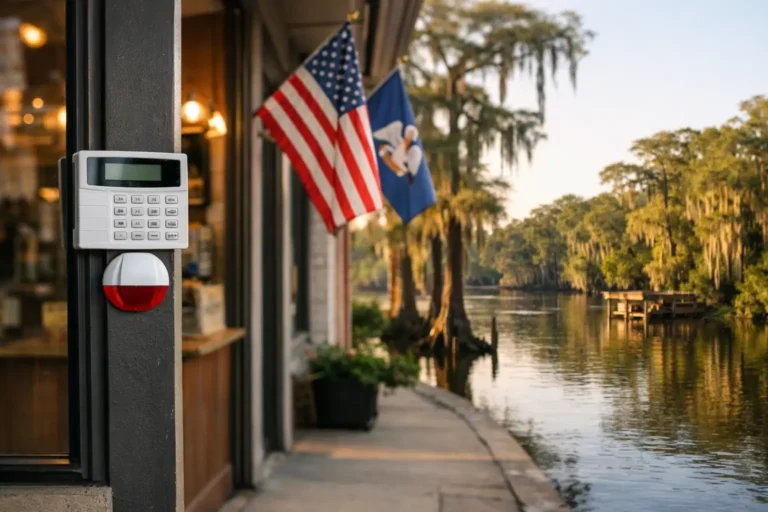
Door and window contacts help secure common entry points. Motion detectors can cover interior spaces where someone should not be after closing. Glass-break detection may be a good fit for businesses with large windows or storefront glass. A properly placed siren can discourage an intruder and alert people nearby.
Professional monitoring adds another layer of protection. If an alarm is triggered, trained monitoring personnel can follow the response plan for your account, including contacting designated keyholders and requesting emergency response when appropriate. This is especially valuable when you cannot be available to watch your business around the clock.
The right setup depends on the layout and how the building operates. An alarm system should allow employees to move through approved areas without creating constant false alarms, while still protecting the places that matter most.
Consider Cameras as Part of the Plan
Security cameras do not replace an intrusion alarm, and an alarm does not replace cameras. Together, they provide a clearer picture of what is happening at your property.
Cameras can help you check entrances, register areas, stockrooms, parking lots, loading zones, and other key spaces from a smartphone or computer. When paired with alarm activity, video can help verify whether an alert appears to be a real emergency or an employee arriving early.
Placement matters more than camera quantity. A camera aimed at a doorway should capture faces clearly, while a parking-lot camera needs appropriate coverage and lighting. Indoor cameras may help protect inventory or document activity in restricted areas, but they should be placed thoughtfully and used in accordance with workplace policies and privacy expectations.
For many Louisiana businesses, weather is another consideration. Outdoor equipment should be selected and installed for heat, humidity, rain, and the conditions around your property. Professional installation helps avoid weak camera angles, unreliable connections, and equipment placed where it cannot do its job.
Use Access and Activity Reports Wisely
Traditional keys are difficult to track. If a former employee still has a key, a business owner may not know until there is a problem. Managed access tools and individual user codes can provide more control over who enters and when.
Each employee can receive a unique code rather than sharing one code across the entire team. This can make it easier to remove access when someone leaves and review opening and closing activity. Depending on the system, you may also receive notifications when the business is armed, disarmed, or left unsecured after a scheduled time.
These reports are not about creating a culture of distrust. They help owners confirm that routines are being followed and give managers a practical way to address issues early. For businesses with several shifts, multiple locations, or staff members who work independently, that visibility can be especially useful.
Choosing Monitoring That Matches Your Operations
Self-monitored systems may send notifications to your phone, but they place the responsibility on you to see the alert, assess it, and act. That can be difficult during a customer meeting, overnight, or when cell service is limited. Professional monitoring provides a dedicated response process even when you are unavailable.
Ask how alarm signals are handled, how account contacts are updated, and what happens if an employee accidentally triggers the system. You should also understand how to place a system on test, how to report service needs, and how to update your call list as managers or keyholders change.
Reliability depends on more than the monitoring center. The system should have dependable communication options and backup power considerations so it can continue reporting during common disruptions. Your security provider should explain these features in plain language and make sure your team knows how to use the system before relying on it.
Avoid the Cheapest-Quote Trap
Price matters, particularly for a small business managing payroll, inventory, and overhead. Still, the lowest initial quote can become expensive if it leaves out needed sensors, includes poor-quality installation, or provides limited support after the sale.
Compare proposals based on the complete service, not just the monthly rate or number of devices. Confirm what equipment is being installed, where it will be placed, whether monitoring is included, and how service calls or future changes are handled. Ask whether the system can grow with your business if you expand, add a new office, or change your building layout.
A customized plan may cost more than a basic do-it-yourself package, but it can reduce blind spots and save your staff from having to troubleshoot security technology on their own. The best value is dependable protection that fits the way your business actually operates.
Why Professional Installation Matters
An alarm system is only as effective as its design, installation, and ongoing service. A sensor installed on the wrong door, a camera blocked by glare, or a control panel that employees do not understand can create frustration when security matters most.
A professional installer can identify coverage concerns, position equipment correctly, test every device, and train the people who will use the system every day. That training should include arming and disarming, handling accidental alarms, using mobile controls, and knowing whom to call for support.
Local service also has practical value. When your business changes, you want a knowledgeable team that can help update user codes, add equipment, troubleshoot an issue, or recommend improvements. Alarm Center Security has served Louisiana since 1985, bringing local experience and hands-on support to businesses that need security to work reliably.
Build a Security Plan Your Team Will Follow
Even the best equipment needs consistent habits. Assign who opens and closes the business, decide when the system should be armed, and keep emergency contacts current. Review access codes regularly, especially after staffing changes. Make sure employees understand that propping open a door or sharing a code can compromise the entire plan.
It also helps to test your system and review your protection as the business changes. A new storage room, additional inventory, remodeled entrance, or expanded parking area can create a new security gap. Regular conversations with your security provider keep the system aligned with your needs.
Your business represents years of work, the livelihood of your employees, and the trust of your customers. A professionally designed, monitored alarm and camera system gives you a practical way to protect all three. Request a free estimate from a local security professional and start with a plan built for your property, not a one-size-fits-all package.