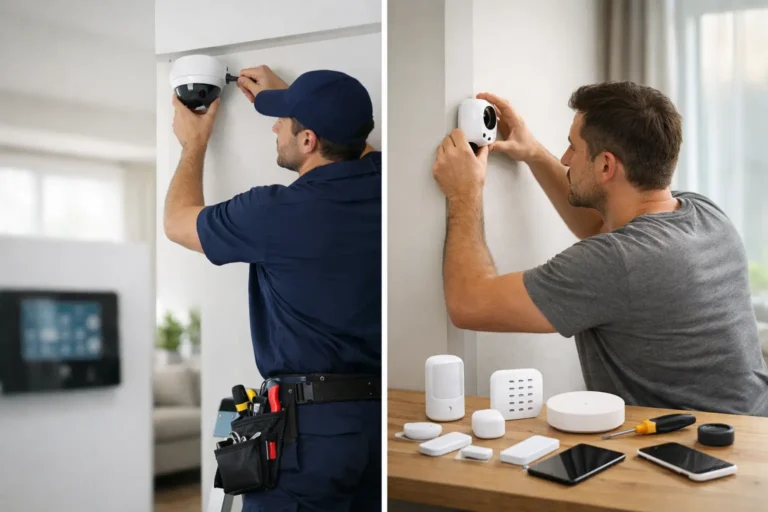
A security system can look simple in a box: a few sensors, a camera, an app, and a promise that setup takes an afternoon. But the right choice is rarely about whether you can mount a device on a wall. It is about whether the system will protect the places, people, and routines that matter most when you are away, asleep, or responding to an unexpected problem. In the professional installation vs DIY security decision, the real question is how much confidence, time, and ongoing support you need from your protection.
For Louisiana homeowners and business owners, that decision often comes down to more than price. Humidity, changing property needs, storm concerns, unreliable Wi-Fi locations, multiple entry points, and the need for dependable local support can all affect how well a security system performs over time.
Professional Installation vs DIY Security: The Core Difference
DIY security systems are designed for self-service. You choose the equipment, place the devices, connect them to your network, configure the app, and handle most troubleshooting. This can be a practical choice for a small apartment, a temporary living situation, or someone comfortable testing devices and adjusting settings independently.
Professional installation begins with the property rather than a prepackaged kit. A security professional evaluates doors, windows, traffic patterns, lighting, camera views, communication paths, and the way your family or staff uses the building. The equipment and placement are then selected to address the risks that are actually present.
That distinction matters. A sensor installed on the wrong type of window, a camera aimed toward glare, or a panel placed where cellular and Wi-Fi signals are weak can leave a system less effective than it appears. Professional installation is not simply about having someone else do the work. It is about designing a system that works as a coordinated layer of protection.
When DIY Security Can Make Sense
DIY systems have earned their place. They are often less expensive upfront, readily available, and easy to take with you if you move. For a renter who wants a basic camera and a few wireless sensors, a self-installed system may provide a reasonable starting point.
They can also work well for people who enjoy managing technology. If you are comfortable pairing devices, diagnosing connectivity problems, maintaining batteries, reviewing camera settings, and keeping up with software changes, you may be satisfied with a DIY approach.
Still, lower upfront cost does not always mean lower cost over the life of the system. A homeowner may purchase extra devices after discovering coverage gaps. A business owner may spend valuable hours trying to resolve notification errors, user permissions, or camera blind spots. Replacement devices, upgraded networking equipment, and add-on monitoring can also change the original budget.
The bigger limitation is that many DIY systems rely heavily on the owner to notice and correct problems. If a sensor goes offline, a camera loses connection, or an app setting changes, there may be no experienced local team available to assess the entire system and recommend a practical fix.
What Professional Installation Adds
A professionally installed system is built around a clear protection plan. For a home, that may include perimeter protection, interior motion detection, smoke or carbon monoxide detection, video doorbells, outdoor cameras, and smart controls. For a business, it may also include employee access management, opening and closing reports, intrusion detection, video coverage for inventory or entrances, and alerts that help owners stay informed after hours.
Placement is one of the most valuable parts of the process. Cameras need the right height, angle, field of view, and lighting conditions to capture useful footage. Sensors need to be positioned so normal daily activity does not create unnecessary alarms, while vulnerable entry points remain protected. In larger buildings, communication reliability and system expansion also need to be considered from the start.
Professional installation also reduces the burden on the customer. Instead of spending a weekend reading instructions and testing devices, you have trained technicians handle setup, confirm operation, explain how to use the system, and answer questions before they leave. That is especially valuable for busy families, property managers, and business operators who need security to support daily life rather than become another project to manage.
With Alarm Center Security, customers also have the benefit of a locally owned team that has served Louisiana since 1985. A local provider understands that service after installation matters just as much as the equipment installed on day one.
Monitoring Changes the Equation
Installation is only one part of security. The response plan matters just as much.
Many DIY products send alerts to a phone. That can be useful, but it requires the account owner to see the notification, decide whether it is urgent, and take action. If you are in a meeting, driving, traveling, sleeping, or without cell service, an alert alone may not provide the response you expected.
Professional monitoring gives an alarm event a defined path. When a monitored system is triggered, trained operators can follow established procedures and contact emergency responders when appropriate. For homeowners, that can provide reassurance during vacations, workdays, and overnight hours. For businesses, it can help protect a property when no employee is available to respond.
Not every property needs the same monitoring setup. A small seasonal home may have different requirements than a busy retail location, medical office, warehouse, or family home with children. A professional can explain those differences clearly and help you choose coverage that matches the risk without paying for features you will not use.
Reliability Is More Than the Equipment
A quality camera or sensor is only as dependable as its connection, power source, settings, and installation. DIY systems can be vulnerable to weak Wi-Fi, dead batteries, incorrect mounting, accidental unplugging, and app or router changes. These issues are manageable, but they require attention.
Professionally installed systems are designed with reliability in mind. Technicians can identify areas where a device may struggle to communicate, recommend suitable equipment, test each component, and confirm that users know how to arm, disarm, and manage alerts. They can also help plan for power or communication interruptions, which is an important consideration during severe weather.
This does not mean a professionally installed system never needs service. Batteries wear down, technology evolves, and a growing family or business may need additional protection. The difference is having a knowledgeable resource to call when the system needs attention, a repair, or an upgrade.
Comparing Cost the Right Way
DIY security usually wins on initial price. You can start small and add devices over time. For someone with basic needs and technical confidence, that flexibility can be worthwhile.
Professional installation generally requires a larger investment at the beginning, particularly when a property needs multiple cameras, integrated life-safety devices, access control, or a monitored alarm system. But that investment includes planning, installation, system testing, instruction, and access to ongoing support. It can also prevent the expense and frustration of buying devices that do not work well together or do not adequately cover the property.
The most useful comparison is not the sticker price of a kit against an installation quote. Consider the full picture: the value of your time, the cost of gaps in coverage, the need for monitoring, the reliability of the connection, and who will help when something stops working. For a business, include the cost of downtime and the responsibility of managing employee access or security incidents yourself.
Which Option Is Right for Your Property?
DIY security may be a fit if your space is small, your needs are limited, and you are comfortable taking responsibility for installation and upkeep. It can be a good entry point for basic awareness and convenience.
Professional installation is usually the stronger choice when protecting a larger home, a new construction project, a business, valuable equipment, multiple entrances, or a property that needs dependable monitoring. It is also a practical choice for anyone who wants a system designed around their property and a real person to call for service.
Security should feel dependable, not complicated. Before choosing a system, walk through your property with a clear eye: where would someone enter, what would you need to see, who needs access, and what happens if an alarm goes off while you cannot answer your phone? Those answers can point you toward the level of protection and support that will give you genuine peace of mind.