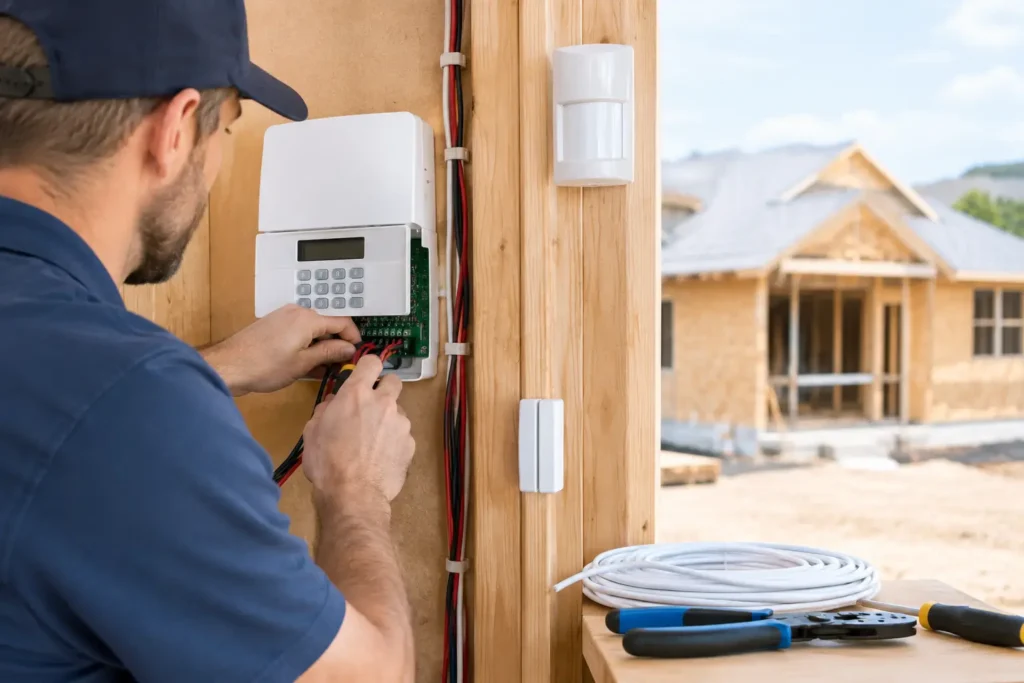
A home or business is easiest to protect before the drywall goes up. Once walls are closed, adding a camera cable, door contact, keypad location, or network connection can mean extra labor, surface-mounted wiring, and compromises in placement. This new construction alarm wiring guide helps Louisiana property owners make the key decisions at the right time: during planning and before the building is finished.
A well-planned system should protect more than the front door. It should fit how people enter the property, where valuables are kept, how the building will be used, and what technology will matter years from now. Professional planning early in construction gives you cleaner installation options and more flexibility without turning security into a last-minute decision.
Start Security Planning Before the Prewire Stage
Security wiring should be discussed alongside electrical, low-voltage, networking, audio, and smart-home plans. The best time is after the floor plan is stable but before insulation and drywall. At this stage, your security professional can review exterior doors, accessible windows, garage entries, utility rooms, office areas, storage spaces, and potential camera views.
For a residence, begin with the everyday routines that make a home vulnerable or inconvenient to manage. Think about which door the family uses most, whether a garage connects directly to the home, where packages are delivered, and whether pets move through common areas. A system can be designed around these details instead of relying on a standard package that may not match the property.
For a business, look at opening and closing procedures, employee entrances, cash-handling areas, equipment rooms, and locations that need video documentation. A retail shop, medical office, warehouse, and professional office can all need different combinations of intrusion detection, cameras, access control, and managed monitoring.
New Construction Alarm Wiring Guide: What to Plan
Wiring is not just about running cable to every possible location. It is about choosing the right wired connections where reliability, appearance, and long-term serviceability matter most. Wireless equipment can be a useful part of a modern security system, especially for future additions, but new construction gives you a valuable opportunity to hardwire critical points.
Doors, windows, and glass protection
Exterior doors are typically among the first devices to consider. Wired door contacts can indicate whether an entry door is open or closed and can be integrated into a professionally monitored alarm system. Plan for the front door, rear door, garage-to-home door, patio doors, and any side or utility entries.
Window contacts may be appropriate for accessible first-floor windows, windows near roofs or balconies, or areas containing valuables. In some homes, motion detectors and glass-break detection may provide more practical coverage than wiring every window. The right answer depends on the size of the home, the layout, the number of openings, and how the family intends to use the system.
Do not assume every opening requires the same device. Large rooms with several windows may benefit from a carefully positioned glass-break detector, while a secluded ground-floor office may warrant individual contacts. A professional site review prevents both under-protection and unnecessary equipment.
Motion detectors and interior spaces
Motion detection adds an important layer when an intruder enters the building without opening a protected door or window. Common locations include main hallways, living areas, stairways, offices, and paths leading to valuable equipment or inventory.
Placement matters. Detectors should account for pets, ceiling height, HVAC airflow, sunlight, and normal movement within the property. A device placed solely because it is easy to wire may create avoidable false alarms or leave a key path uncovered. During construction, the goal is to run wiring to practical coverage locations, then confirm final device placement once the room is complete.
Security cameras and video doorbells
Prewiring for cameras is one of the most useful investments in a new build. Wired camera connections can support dependable video transmission and power options while avoiding the need to depend entirely on a wireless signal outdoors. Camera locations often include front approaches, driveways, rear doors, patios, garages, side yards, parking areas, loading zones, and building entrances.
Good camera planning begins with the view, not the device. A camera mounted too high may capture a wide area but miss facial detail. A camera facing directly into Louisiana afternoon sun can produce poor images at the time they are needed most. Your installer should consider lighting, rooflines, access for service, privacy boundaries, and the path needed to run cable back to the equipment location.
A video doorbell is also easier to plan in new construction. Confirm that the mounting height, door trim, power requirements, and Wi-Fi coverage will support the model selected. Even when a device communicates wirelessly, thoughtful wiring and network planning can improve performance.
The control panel, keypad, and equipment location
Every system needs a central location for its panel, communications equipment, and supporting connections. This area should be accessible to authorized adults or managers but not obvious to a visitor. A structured wiring enclosure, utility room, locked office closet, or dedicated low-voltage space may work well depending on the property.
Avoid placing security equipment in a location that becomes excessively hot, damp, crowded, or difficult to service. The system also needs dependable power and a communication path for monitoring. Your security professional can coordinate requirements with the electrician and technology contractor so the panel is not treated as an afterthought.
Keypads or touchscreens should be placed where users can arm and disarm the system naturally, such as near a primary entry or garage entrance. In a business, a keypad may be needed at an employee entrance or in a manager-controlled area. Convenience encourages consistent use, which is one of the most overlooked parts of effective security.
Coordinate With Your Builder and Other Trades
A new construction prewire must fit the construction schedule. Security cable should be installed after framing is complete and before insulation, drywall, and final finishes. The installer should clearly label each cable, document its destination, and protect wire ends from damage while the project continues.
Coordination prevents common problems. Security wiring should stay clear of high-voltage electrical work and be routed in a way that allows future service. Camera and network cabling need a path through walls, attics, conduits, or soffits that will remain accessible. If motorized gates, garage doors, access-control locks, or exterior buildings are part of the project, discuss them early because they may require specialized wiring and power planning.
It is also wise to plan for network equipment. Smart security features, remote control, video viewing, alerts, and automation depend on a reliable internet connection and strong coverage throughout the property. Large homes, metal structures, detached buildings, and commercial spaces may need more than a single router in a back room.
Build for the Way You Will Use the Property Later
New construction security should allow room for change. A family may later want cameras at a pool area, smart locks for aging parents, automation for lights, or protection for a detached workshop. A business may add staff, expand storage, change its hours, or need controlled access to sensitive rooms.
Running conduit or spare cable to strategic locations can make future upgrades far easier. This does not mean wiring every wall without a purpose. It means identifying likely expansion areas and creating reasonable options before finishes make access difficult.
For commercial properties, future planning can include additional doors, access readers, cameras over registers, warehouse coverage, or alarm zones for tenant improvements. For homes, it may include a future outdoor kitchen, gate, shed, workshop, or second-floor office. A locally designed plan can account for how Louisiana properties are actually built and used, including detached structures, covered patios, and storm-season concerns.
Do Not Treat Life Safety as a DIY Add-On
Security and life-safety devices can work together, but they are not interchangeable. Smoke alarms, carbon monoxide detection, fire alarm systems, sprinkler monitoring, and emergency notification may have code requirements that vary by property type and jurisdiction. Commercial fire alarm work especially requires proper design, installation, inspection, and coordination.
Tell your security provider and builder about any life-safety needs from the start. That conversation helps ensure the system is designed responsibly and that the right professionals handle work requiring specific licensing, permits, or inspections.
Choose Professional Design, Installation, and Monitoring
The value of prewiring is realized only when the finished system is designed, installed, tested, and supported correctly. Equipment should be placed for dependable operation, users should know how to operate it, and monitoring should be ready to respond when an alarm occurs. A low-cost prewire without documentation or follow-through can create frustration later.
Alarm Center Security has helped Louisiana homeowners and businesses protect their properties since 1985. A personalized new construction consultation can help you coordinate security, cameras, smart control, and professional monitoring before the walls close. Request a free estimate early in the building process, when a well-planned wire run can still save time, preserve the look of your property, and support the protection you will rely on every day.