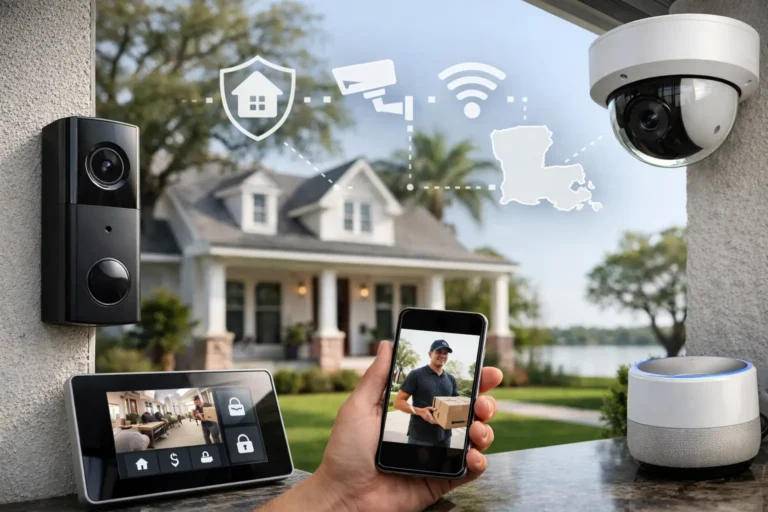
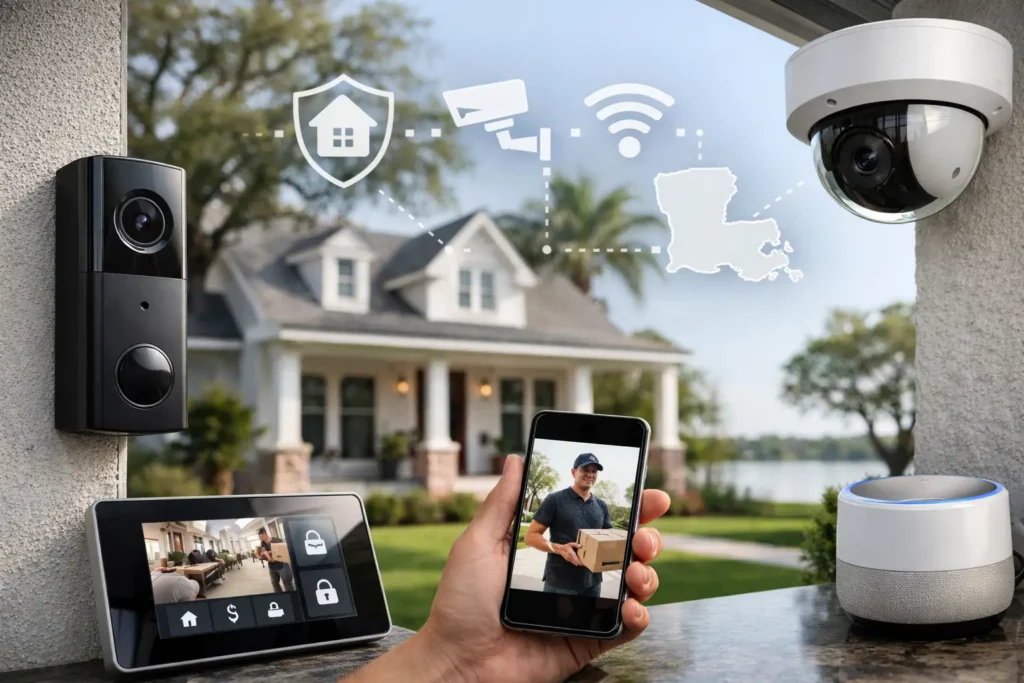
A security system should do more than make noise after a break-in. It should help you see what is happening, respond quickly when something is wrong, and stay connected to the people and property you care about. That is the practical direction behind home security trends 2026: better information, more useful control, and professional support when a homeowner cannot respond personally.
For Louisiana families, the right upgrades also need to work in real conditions. That means considering heavy rain, storm-season power interruptions, changing routines, package deliveries, pets, and homes that may sit empty during travel. The best security plan is not necessarily the one with the most devices. It is the one designed around your home, habits, and priorities.
Home Security Trends 2026: Smarter, More Useful Protection
Video verification is becoming more valuable than more alerts
Homeowners have grown used to motion notifications from doorbell cameras and outdoor surveillance cameras. The problem is that a stream of vague alerts can become easy to ignore. In 2026, the focus is shifting toward video and analytics that provide context: a person approaching a door, a vehicle entering a driveway, or activity in an area where no one should be.
This does not mean every motion alert should trigger an emergency response. A tree branch, a neighborhood cat, or a passing car can still create activity. The value comes from setting up cameras and detection areas correctly, then receiving alerts that help you decide whether to check in, contact a neighbor, or call for help.
Camera placement matters as much as camera quality. A professionally planned system can cover entry doors, driveways, side gates, detached garages, and other vulnerable areas without creating unnecessary blind spots. Good lighting, proper mounting height, and dependable connectivity all affect whether footage is useful when it matters.
Professional monitoring remains the safety net
Smartphones give homeowners more control, but they do not replace professional monitoring. You may be in a meeting, driving, asleep, on vacation, or unable to look at an alert right away. A monitored alarm system provides a response path when a burglary, fire, carbon monoxide event, or panic alarm requires attention beyond a push notification.
This distinction is especially important during severe weather or evacuation situations. Remote access can let you check a camera or confirm that an alarm is armed, but professional monitoring adds another layer of protection if an emergency signal is received and you cannot act.
The trade-off is straightforward: self-monitored devices may appear less expensive at first, while professional monitoring adds an ongoing service cost. For many families, that cost is justified by knowing trained operators are available to respond when a real alarm occurs. The best choice depends on the household’s schedule, travel habits, and level of risk.
Security and home automation are working together
Security is increasingly connected to everyday convenience. Through smart control tools, homeowners can arm or disarm their systems remotely, receive activity notifications, manage smart locks, adjust lights, and create rules that fit daily routines. For example, a family may want certain lights to turn on when the system is disarmed in the evening, or receive a notice when a child arrives home and enters with a unique code.
Automation should support security rather than complicate it. A simple setup is usually more reliable than a long chain of rules no one remembers how to manage. Start with the routines that solve a real problem, such as confirming a door is locked after leaving for work or giving a trusted service provider temporary access without sharing a house key.
For households with aging relatives, frequent visitors, or rental properties, managed access can be particularly helpful. Individual user codes create a clearer record of who entered and when. If access needs change, a code can be updated or removed without changing locks.
More Homes Are Moving Beyond the Front Door
Doorbell cameras remain popular, but protection is expanding to the full property. Homeowners are paying closer attention to side yards, backyard gates, workshops, sheds, pool areas, and outdoor equipment. These spaces can hold valuable tools and recreational equipment, yet they are often poorly lit and less visible from the street.
A complete plan may include a combination of intrusion sensors, cameras, lighting control, and monitored life-safety devices. The goal is not to turn a home into a complicated control room. It is to create layers that discourage unwanted activity, detect entry, document events, and help summon a response when needed.
New construction is also creating an opportunity to plan ahead. Prewiring during construction can provide cleaner camera locations, organized equipment placement, and fewer visible wires later. Even in an existing home, a professional installer can recommend practical options that work with the structure rather than forcing a one-size-fits-all package.
Privacy is part of a good camera plan
As cameras become more common, homeowners are asking better questions about privacy. A camera should protect your property without unnecessarily capturing private areas. Avoid aiming cameras into bedrooms, bathrooms, or neighbors’ private spaces. Review user access regularly, use strong passwords, and remove former household members or contractors from system access when appropriate.
It is also wise to decide who needs notifications. If every family member receives every alert, meaningful activity can get lost in the noise. Tailored notifications help each person receive the information that is relevant to them.
Reliability Matters More Than Flashy Features
The most impressive app feature is of little value if the system is not installed correctly, maintained, or supported when questions arise. In 2026, homeowners are looking more closely at the basics: dependable sensors, backup power, cellular communication options, secure account access, and responsive local service.
Ask how a system will continue operating during a power outage or internet interruption. Many professionally installed systems use backup batteries and cellular communication so alarm signals can still be sent even when a home’s Wi-Fi is unavailable. The exact equipment and backup capabilities should be reviewed as part of the design process.
Maintenance also deserves attention. Test alarms and life-safety devices as recommended, replace batteries when prompted, keep contact lists current, and make sure everyone in the household knows how to arm, disarm, and use emergency functions. These simple steps prevent avoidable confusion during a stressful moment.
Choosing Upgrades That Fit Your Home
Not every 2026 security trend belongs in every house. A homeowner who travels often may prioritize monitored intrusion protection, remote arming, and exterior cameras. A family with school-age children may benefit from door and garage alerts, smart locks, and individual user codes. Someone with a large property may need stronger perimeter coverage and well-planned outdoor surveillance.
Before adding equipment, consider these questions: Which entrances concern you most? When is the home empty? Do you need to monitor an elderly family member, a pet, or a secondary property? What information would help you act faster during an alarm? Clear answers lead to a more useful system and avoid paying for features that will go unused.
A local security provider can assess the property, explain realistic options, and handle installation, monitoring, and ongoing support. Alarm Center Security has protected Louisiana homes and businesses since 1985, with more than 10,000 installed systems and a team that understands the value of responsive, personal service.
The most meaningful security upgrade is the one that gives you confidence when you leave the driveway, settle in for the night, or check on home from miles away. A thoughtful plan, installed and supported by professionals, lets technology serve a simple purpose: helping protect the people and places that matter most.