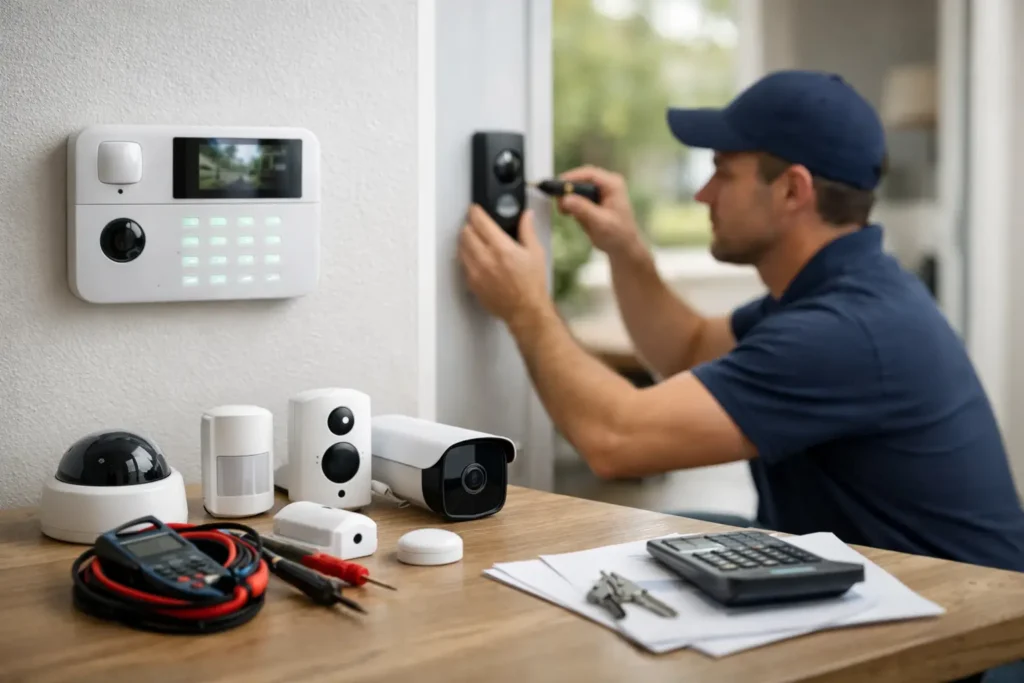
Sticker shock usually shows up when a homeowner gets a quote for security and compares it to a low monthly ad from a national brand. The real home security system installation cost depends on what is being installed, how your home is built, and whether you want real protection or just a basic starter package.
That difference matters. A professionally installed system is not just a few sensors and a keypad. It is system design, device placement, wiring or wireless setup, mobile control, testing, and ongoing support. When the system is tailored to the home and the people living in it, the price tends to make a lot more sense.
What affects home security system installation cost?
The biggest factor is the size and layout of the home. A small single-story house with a few entry points will usually cost less to secure than a larger home with multiple doors, first-floor windows, detached buildings, or areas that need camera coverage. More openings mean more sensors, more labor, and more planning.
Equipment choices also change the total quickly. A basic intrusion system with door contacts, motion detection, a control panel, and professional monitoring sits at one price point. Add smart locks, video doorbells, indoor or outdoor cameras, glass break detectors, fire protection, flood sensors, or automation features, and the investment rises. That does not mean the higher-cost option is excessive. It often means the system is covering more real-world risks.
Installation complexity is another major piece. Some homes are straightforward. Others have construction features that require more time, careful routing, or special device placement. Older homes, custom homes, and larger properties can require more labor than a standard setup. If a system is being added during new construction or a remodel, costs may be more efficient because planning and prewiring can happen earlier.
Monitoring service also needs to be part of the conversation. Many homeowners focus only on the upfront number, but professional monitoring is what turns an alarm into a response system. That monthly service can include emergency dispatch communication, mobile app access, alerts, remote control, and support. Lower installation pricing sometimes comes with longer contracts or limited equipment, so it is worth looking at the full cost over time.
Typical price ranges homeowners can expect
For most homeowners, a professionally installed home security system installation cost will fall somewhere between a few hundred dollars for a modest setup and several thousand dollars for a larger, more advanced system. A simple package may cover the essentials, while a more complete solution with cameras, smart home control, and life-safety devices will naturally cost more.
A basic professionally installed system often includes the control panel, a keypad or touchscreen, a few door or window sensors, and one motion detector. This is often enough for smaller homes or for homeowners who want a solid starting point. Mid-range systems usually expand coverage, improve app control, and add devices like video doorbells, cameras, or smart locks. Higher-end systems tend to include broader camera coverage, automation, environmental sensors, and a more customized design for the property.
The key is not to shop by price alone. Two quotes can look similar on paper and still provide very different levels of protection, usability, and support. One system may cover the obvious entry points. Another may account for daily routines, package deliveries, garage access, pet movement, and remote control for a busy household.
Equipment costs versus installation labor
Homeowners often ask whether most of the money goes to hardware or labor. The answer is both, depending on the system. Equipment pricing reflects the number of devices and the quality of the platform. Labor covers setup, mounting, programming, testing, user training, and making sure the entire system works together.
Professional installation adds value because a security system is only as good as its design and reliability. A poorly placed motion detector, a camera pointed at the wrong angle, or sensors installed without considering how the family actually uses the home can leave gaps. Proper installation helps avoid false alarms, weak coverage, and frustrating day-to-day use.
There is also the issue of integration. When cameras, alarms, smart locks, garage controls, and mobile alerts are set up to work together, the system becomes easier to use and more effective. That kind of coordination takes planning, not just parts out of a box.
Wired, wireless, and smart home features
Wireless systems are popular because they are typically faster to install and less disruptive in finished homes. They can still provide strong protection, especially when designed and installed professionally. For many homeowners, wireless equipment helps keep labor costs lower while still allowing expansion later.
Wired or hybrid systems may make sense in certain homes, especially new construction or properties where long-term infrastructure matters. These setups can involve more labor upfront, but they may offer advantages depending on the building and the goals of the owner. There is no universal best option. It depends on the property, the budget, and how much future growth the homeowner wants.
Smart home features also affect price. Remote arming and disarming, mobile alerts, video verification, smart thermostat control, automated lights, and lock management all add convenience, but they also add equipment and programming time. For many Louisiana homeowners, those features are not just extras. They help people manage busy schedules, check on children coming home, confirm deliveries, and keep an eye on the property during storms or travel.
Why DIY comparisons can be misleading
DIY systems can look less expensive at first, and for some people they may be enough. But they often shift the burden to the homeowner. You are responsible for device placement, installation quality, troubleshooting, app setup, and figuring out what to do if something stops working. If the system does not fully cover the home, the lower price loses its appeal fast.
Professional installation costs more because it includes expertise. That includes evaluating vulnerable entry points, recommending the right mix of devices, and making sure the system is dependable from day one. It also means there is someone to call when you need service, adjustments, or upgrades.
That support matters more than many people expect. Security systems are not one-time purchases. Families change, routines change, homes expand, and technology evolves. A local provider can help the system keep up instead of becoming outdated or underused.
Questions to ask before you compare quotes
If you are reviewing estimates, ask what is included in the installation price and what is not. Some quotes include only a limited number of sensors. Others may not include app access, camera setup, user training, or permit-related guidance. It is also smart to ask about warranties, service calls, monitoring terms, and how future additions are handled.
You should also ask whether the system is customized or packaged. Packaged systems can work for some homes, but many properties need more thoughtful planning. A good quote should reflect your actual layout, your concerns, and how you live in the home.
The provider matters too. A local company with established experience in your area will often have a better understanding of neighborhood needs, building styles, weather-related concerns, and service expectations. Alarm Center Security has served Louisiana since 1985, and that kind of local history changes the customer experience in a very practical way. You are not just buying equipment. You are choosing who will help protect your property over time.
The real value behind the price
A lower quote is not always the better value. If the system leaves blind spots, causes false alarms, or lacks reliable support, you may end up spending more to fix it later. A well-installed system should feel dependable, simple to use, and ready when you need it.
For most homeowners, the best approach is to think about home security system installation cost as part of a bigger decision. What risks are you trying to reduce? How much visibility do you want when you are away? Do you need basic intrusion protection, or do you want cameras, smart control, and life-safety monitoring as well?
The right answer is different for every home. A clear quote, honest recommendations, and professional installation usually lead to the best long-term result. When a system is built around your property and your routine, the cost is easier to understand because the protection is easier to trust.
If you are considering a new system, ask for an estimate that reflects your home, not a one-size-fits-all package. A good security plan should fit your needs today and still make sense a few years from now.