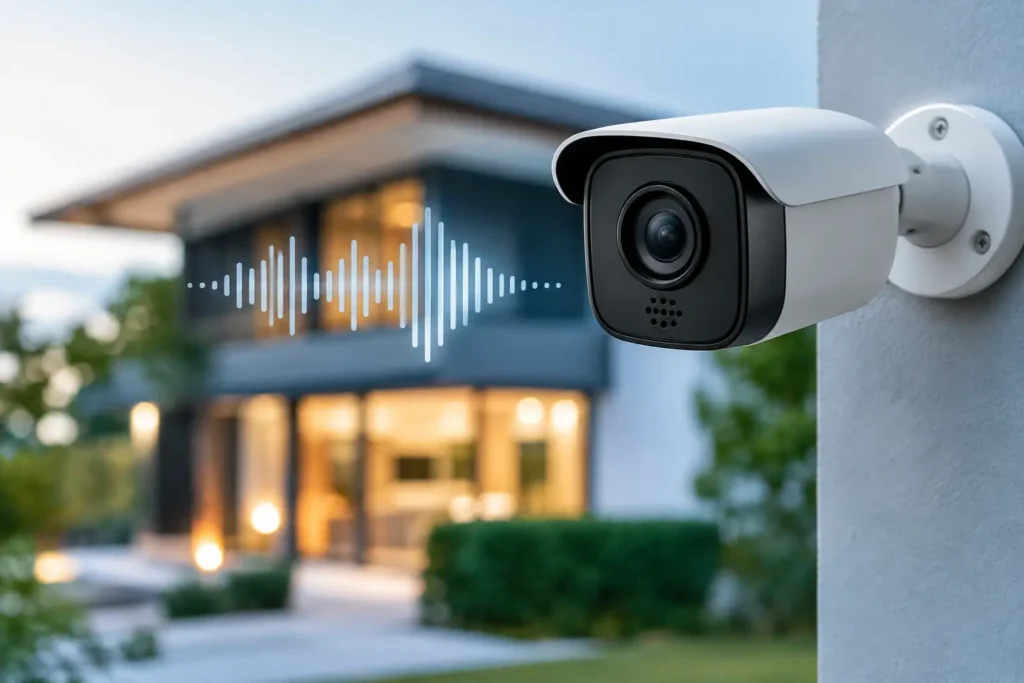
A security camera can show you who approached the front door, entered a loading area, or moved through a hallway after hours. Camera audio recording can add useful context to that video, capturing a conversation, a warning, or the sound of a disturbance. But because sound recording raises real privacy concerns, it should be planned as carefully as the cameras themselves.
For Louisiana homeowners and business owners, the question is not simply whether a camera has a microphone. The better question is whether audio supports a specific safety goal, respects the people on the property, and is installed in the right location. A professionally designed system helps answer all three.
When Camera Audio Recording Adds Value
Video is powerful, but it does not always tell the full story. A camera may capture a person standing at a gate, for example, without revealing whether they were asking for help, making a delivery, or attempting to gain access. Audio can provide context that helps a property owner, manager, or responding authority better understand what occurred.
At a home, two-way audio at a front door camera can let a family speak with a visitor without opening the door. It can be helpful when a package arrives, a child gets home from school, or an unfamiliar person approaches the entryway. In some situations, a clear verbal warning can discourage unwanted activity before it escalates.
For businesses, audio may be useful at public-facing entrances, service counters, reception areas, drive-through lanes, gates, or loading zones. An owner may want to communicate with a delivery driver after hours, direct a visitor to the correct entrance, or address someone who has entered a restricted exterior area. Audio can also help explain an incident that video alone cannot fully document.
That said, more recording is not always better security. If a camera is pointed at a place where audio adds little value, activating the microphone can create unnecessary privacy risk and more footage to manage. The best system is purposeful, not excessive.
Camera Audio Recording and Privacy Expectations
People generally expect less privacy in a visible public area than they do in a private conversation or private space. That distinction matters when planning surveillance coverage. A camera covering a storefront entrance is very different from a device placed near an employee break area, a private office, a restroom, a changing area, or a neighbor’s window.
Never place cameras or microphones in bathrooms, changing rooms, bedrooms used by guests, or any area where a person has a strong expectation of privacy. Businesses should also be cautious around employee-only spaces. Security cameras can protect inventory, staff, and operations, but the coverage should be directly connected to a legitimate security need.
Audio deserves additional care because conversations can contain personal information. A visitor may discuss a medical appointment at a front desk. An employee may make a personal phone call near a work area. A neighbor may be outside their own home. Camera placement, microphone range, and settings should be selected to avoid collecting more than is reasonably necessary.
If your cameras can record sound, visible notice can help set expectations for visitors and employees. For commercial properties, clear signage is often a practical part of a responsible surveillance plan. It promotes transparency and can also discourage theft, vandalism, and unauthorized entry.
Laws regarding audio recording, consent, and privacy can depend on the specific circumstances and may change over time. This article is general information, not legal advice. Homeowners and business operators with questions about a particular recording practice should consult qualified legal counsel before enabling audio recording.
Choosing Between Live Audio and Recorded Audio
Not every property needs recorded audio. Many camera systems offer two-way talk, allowing a user to hear what is happening and speak through the camera from a mobile app. This may be enough for a front door, gate, or receiving area where communication is the primary goal.
Recorded audio is different. It creates a stored record that may be reviewed later alongside video. That can be useful after an incident, but it also means the property owner has more responsibility for how recordings are accessed, retained, and protected.
For example, a business owner may want live two-way communication at a rear delivery door while choosing not to retain every conversation in that area. Another business may need recorded audio at a public transaction window because disputes or threats have occurred there. The right choice depends on the location, the history of incidents, the people who use the area, and the level of privacy involved.
A security professional can help identify where audio serves a real purpose and where video-only coverage is the better fit. That kind of planning prevents a system from becoming complicated, intrusive, or difficult to manage.
Smart Placement Makes a Difference
The placement of a camera matters as much as its features. Outdoor cameras with audio are often most useful near front doors, driveway entrances, side gates, detached garages, parking areas, and commercial entry points. These locations typically involve visitors, deliveries, access control, or activity after normal hours.
Indoor coverage requires more restraint. A camera in a business lobby may be appropriate, while a microphone that reaches private desks or meeting rooms may not be. In a home, a camera near a main entry may make sense, but coverage should not extend into spaces where family members, guests, or neighbors reasonably expect privacy.
Weather, noise, and distance also affect performance. Louisiana rainstorms, traffic, HVAC equipment, wind, and nearby machinery can make audio difficult to understand. A microphone located too far from the subject may capture mostly background noise. Before relying on audio for a critical area, test it under normal conditions and after dark, when the property may sound very different.
Protecting Recordings and System Access
Security recordings should be treated as sensitive information. If a camera captures video and sound, the account should use strong, unique passwords and multi-factor authentication when available. Access should be limited to the people who genuinely need it, whether that is a homeowner, a trusted family member, a business owner, or a designated manager.
For businesses, user permissions are especially helpful. A manager may need access to live views and recorded clips, while another employee may only need to view a specific entrance during a shift. Removing access promptly when someone leaves the organization is a simple but important protection.
Retention settings deserve attention as well. Keeping recordings indefinitely can increase storage needs and privacy exposure. A practical retention period should reflect the property’s security needs, incident history, and operational requirements. If an event occurs, save the relevant clip according to your internal procedures rather than relying on a broad collection of unnecessary recordings.
It is also wise to discuss how the system will perform during an internet outage, power interruption, or severe weather event. Some solutions offer local recording options, battery backup, or cellular communication features. The right combination depends on the property and the level of continuity you need.
A Professional Plan Is Easier to Live With
Security technology should provide reassurance, not another complicated task for a homeowner or business owner to manage. A professionally installed system can be designed around the actual layout of the property, likely entry points, daily routines, and areas of concern. That includes determining whether audio is appropriate, where it should be enabled, and who should have access to it.
Alarm Center Security has helped Louisiana families and businesses protect what matters since 1985. A local security professional can assess your property, explain the available camera features in plain language, and build a plan that balances visibility, communication, privacy, and dependable monitoring.
The most useful camera system is one you trust enough to use every day. Start with the places where a clear view and a timely response matter most, then add audio only where it serves a defined purpose and respects the people around it.