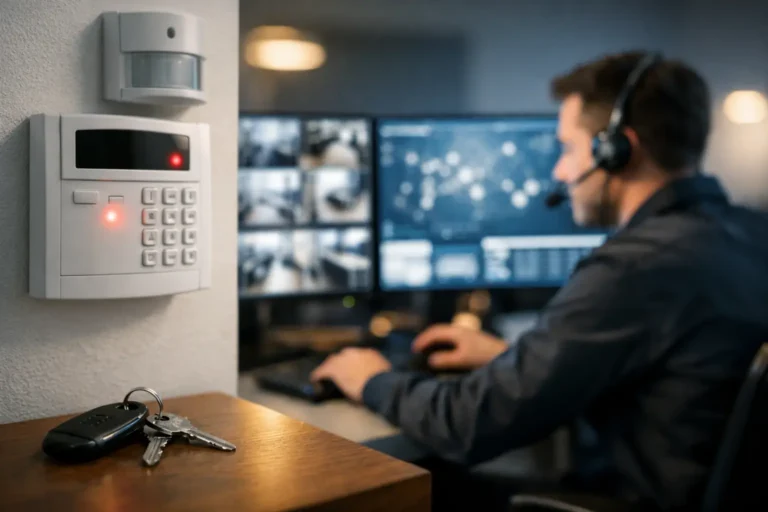
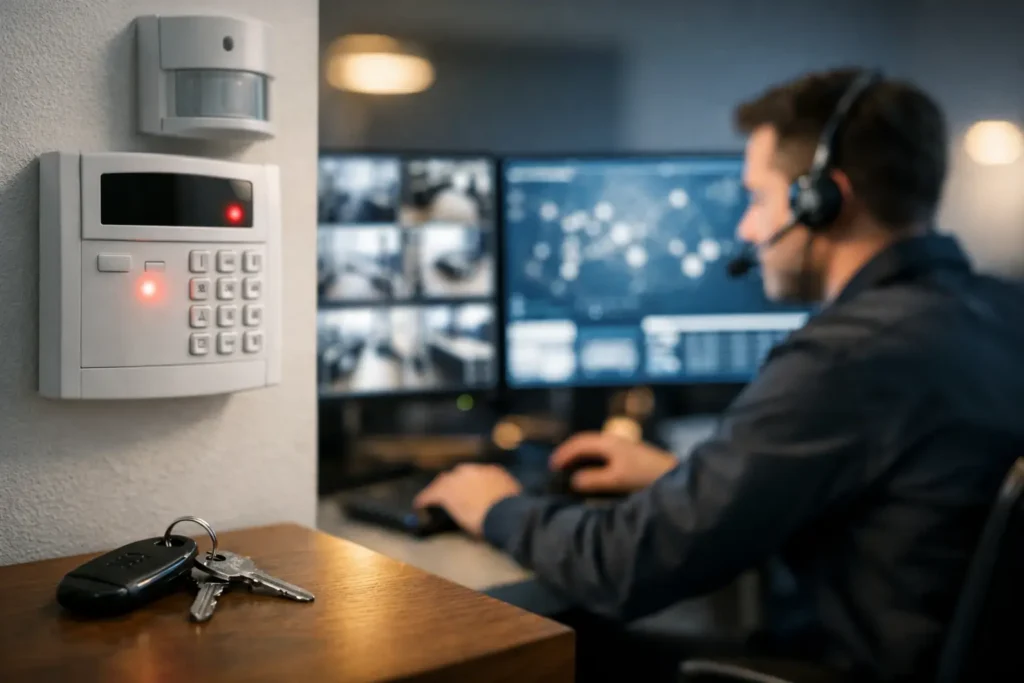
A siren can make a lot of noise. It cannot call the police, verify an emergency, or stay awake through the night. That is where professional alarm monitoring changes the equation for homeowners and business owners who want more than a loud warning.
When your security system is connected to professional alarm monitoring, trained specialists respond when an alarm is triggered. Instead of relying on a neighbor to notice a problem or hoping you see a phone alert in time, you have a team ready to follow a response plan and contact the right authorities when needed. For families, that can mean faster help during a break-in, fire, or medical event. For businesses, it can mean less downtime, better oversight, and fewer chances for an after-hours incident to go unnoticed.
What professional alarm monitoring actually does
At the simplest level, professional alarm monitoring means your alarm system is connected to a monitoring center staffed by real people. When a sensor is tripped, a panic button is pressed, or another emergency signal is received, that center reviews the signal and takes action based on your account instructions and the type of event.
That response may include calling you, checking with a designated contact, or dispatching police, fire, or medical services. The goal is not just to notify you that something happened. The goal is to help move the situation toward the right response quickly and accurately.
This matters because alarms do not always happen at convenient times. Break-ins often occur when no one is on site. Fire signals can happen in the middle of the night. A business owner may be in a meeting, on a job site, or asleep when an alert comes through. Monitoring fills that gap.
Why self-monitoring is not the same thing
Mobile alerts are useful. Remote access is useful. Smart control is useful. But self-monitoring and professional alarm monitoring solve different problems.
Self-monitoring puts the burden on you to notice the alert, decide whether it is real, and make the right calls. That may work in some situations, but it also depends on your phone being charged, your signal being strong, and your attention being available in the moment. If you are traveling, in a movie theater, on a flight, or simply asleep, valuable time can be lost.
Professional monitoring adds another layer of protection. You still get visibility and control through smart tools, but you are not the only one responsible for acting when something goes wrong. For many property owners, that is the real value. It reduces the chance that a critical alert sits unanswered.
Professional alarm monitoring for homes
For homeowners, the biggest benefit is peace of mind backed by action. Door and window sensors, motion detectors, glass break sensors, smoke detectors, carbon monoxide detection, and panic buttons can all be tied into a monitored system. If a signal is triggered, there is a process in place to respond.
That is especially helpful for families with children, older adults, frequent travelers, or anyone who spends part of the day away from home. Monitoring can also work hand in hand with smart home features. You may be able to arm or disarm your system remotely, check camera activity, receive alerts, and manage lights or locks from your phone. The convenience is valuable, but the monitoring piece is what supports you when you cannot respond yourself.
There is also a practical side to it. A professionally installed and monitored system is usually better matched to the layout and habits of the home. That can help reduce blind spots, avoid poor sensor placement, and make the system easier to use consistently.
Professional alarm monitoring for businesses
Business owners face a different set of risks. Theft is one concern, but so are employee access, after-hours activity, opening and closing issues, and costly interruptions. Professional alarm monitoring helps businesses cover those gaps without requiring someone to physically check the property every night.
A monitored commercial system may include intrusion detection, surveillance integration, panic buttons, environmental sensors, and access control support. If a door opens after hours or an alarm is triggered in a restricted area, that event can be escalated based on the plan set for the business.
For small and midsize companies, this can be a practical way to tighten security without building a large internal process around it. Owners and managers get more visibility, and they know there is a response path in place when the building is empty.
Response time matters, but so does accuracy
People often focus on speed, and for good reason. In an emergency, minutes matter. But speed without accuracy can create other problems, especially when false alarms are involved.
A strong monitoring setup is not just about receiving a signal fast. It is about having clear account information, updated contact lists, proper zone labeling, and a response procedure that fits the property. A front door sensor, a warehouse motion detector, and a smoke alarm do not all call for the same handling.
This is one reason professional installation and support matter so much. The equipment has to be placed correctly, tested correctly, and explained clearly. A well-designed system is easier to use, and systems that are easy to use are less likely to be armed incorrectly or trigger preventable false alarms.
Local service makes a difference
Security is personal. The right solution for a downtown office is not the same as the right solution for a family home in a growing neighborhood. A local provider understands that difference because they work in the same communities, know the common property types, and can respond with more context.
That local experience often shows up before and after installation. It affects how a system is designed, how quickly support is delivered, and how comfortable customers feel when they need help. National providers can offer broad reach, but many customers prefer a company they can call and talk to directly when they have a question about their account, equipment, or monitoring plan.
That is one reason Louisiana families and business owners often choose locally owned providers with a long service history. Alarm Center Security has served this market since 1985, and that kind of experience tends to matter when you want dependable recommendations and responsive support.
What to look for in a monitored security system
Not every monitoring setup offers the same value. The monthly rate matters, but it should not be the only factor. The better question is whether the system and service fit the way you actually live or operate your business.
Look for a provider that offers professional installation, clear training, and monitoring options that match your risks. A homeowner may need intrusion, fire, and smart home integration. A business may need scheduled arming, user codes, camera visibility, and activity reports. Good monitoring starts with good planning.
It also helps to choose a company that will still be there after the installation. Systems need updates, users change, phone numbers change, and properties change over time. Reliable ongoing support is part of the service, not an extra.
The real value is confidence when you are not there
Most people do not buy a security system because they want more technology on the wall. They buy it because they want to protect the people, property, and routines that matter to them. Professional alarm monitoring supports that goal in a way a siren alone cannot.
It gives your system a human response behind the hardware. It adds structure when something unexpected happens. And it helps turn alerts into action, whether you are across town, at work, or away for the weekend.
If you are weighing your options, the best next step is usually a conversation about your property, your schedule, and what kind of response would actually help in a real event. The right monitored system should feel dependable, easy to live with, and ready when you need it most.