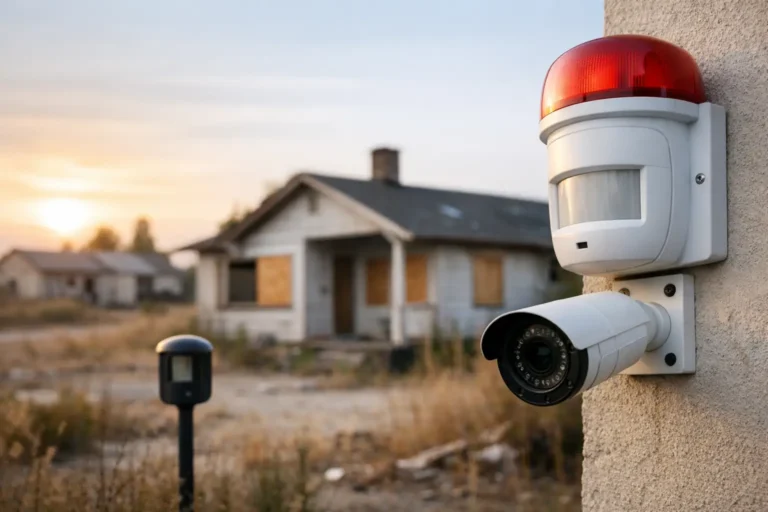

A property does not have to be abandoned to become vulnerable. A home awaiting a sale, a rental between tenants, a seasonal residence, or a business location closed for renovation can all attract unwanted attention. The right vacant property alarm solutions give Louisiana owners a way to know what is happening at an empty building, respond quickly, and protect an investment that cannot watch over itself.
Why vacant buildings need a different security plan
An occupied home or business has natural deterrents: lights come on, vehicles arrive, employees enter, and neighbors see normal activity. When a property sits empty, those signs disappear. A broken window may go unnoticed for days. A leaking pipe can cause extensive damage before anyone visits. A power outage may disable equipment, affect climate control, or leave the building dark.
Vacant properties also face a wider range of risks than a typical occupied location. Intruders may be looking for tools, appliances, copper, equipment, or a place to stay. Vandalism can create expensive repairs and delay a sale, reopening, or move-in date. Severe weather, especially during Louisiana storm season, can turn a small maintenance issue into a major claim if no one is alerted promptly.
That does not mean every empty property needs the same equipment. A furnished house on the market needs a different plan than a warehouse with valuable inventory or a commercial building under construction. The goal is to build security around the property’s actual risks, access points, utilities, and expected vacancy period.
What effective vacant property alarm solutions include
A professionally designed system starts with intrusion detection at the places an unauthorized person is most likely to enter. Door and window contacts can alert when protected openings are opened. Motion detectors add another layer of protection inside key rooms, hallways, or open areas. For larger sites, additional detection can be placed around storage areas, offices, equipment rooms, and other high-value spaces.
Monitored alarm service is especially valuable when a property is empty. A loud siren may discourage an intruder, but it cannot make a call, verify the event, or dispatch help. With professional monitoring, an alarm signal is handled according to the response plan established for the property. That gives owners a dependable line of defense when they are at work, out of town, or managing several properties.
Security cameras provide important visibility before, during, and after an event. Well-placed exterior cameras can cover driveways, doors, gates, parking areas, and rear access points. Interior cameras may be appropriate for commercial locations, model homes, or areas containing equipment. Remote viewing through a smart security app lets an authorized owner check the property from a phone or computer rather than making an unnecessary trip across town.
The best camera plan is not simply a matter of placing a camera on every corner. Cameras should be installed with useful viewing angles, sufficient lighting, reliable connectivity, and a clear purpose. A camera that captures only the top of a person’s head or faces directly into afternoon glare may not provide the information an owner needs.
Environmental alerts protect more than the building envelope
Intrusion is not the only concern. Water sensors can alert owners to leaks near water heaters, sinks, washing machine connections, or mechanical rooms. Temperature sensors can help identify conditions that could threaten pipes, stored materials, or climate-sensitive equipment. Power outage and low-temperature alerts can also be considered where they fit the property and system design.
These notifications are often the difference between a manageable service call and a costly repair. For a vacant property, early notice matters because there may be no one nearby to see a problem develop.
Remote control makes routine checks easier
Smart security tools can reduce the number of unnecessary site visits while helping owners stay informed. Depending on the system, authorized users may receive activity alerts, arm or disarm the system remotely, review camera clips, and manage access for approved visitors.
This is particularly useful when real estate agents, maintenance teams, cleaners, contractors, or prospective tenants need temporary access. Instead of leaving a hidden key or sharing a code that remains active indefinitely, owners can use managed user codes and review access activity. For a business property, that visibility can help confirm when a vendor arrived and when the building was secured again.
Remote access is a convenience, not a substitute for a sound security plan. It works best alongside professionally installed equipment, dependable monitoring, and a clear process for who receives alerts and who can respond locally when needed.
Professional installation avoids common weak points
It can be tempting to place a few retail cameras at an empty property and hope they are enough. DIY devices can have a role in some situations, but they often leave gaps in coverage, depend on inconsistent Wi-Fi, or provide alerts that no one is prepared to act on. An empty property deserves careful planning, particularly when the owner is not nearby.
A professional security assessment considers practical details that are easy to miss: which doors are actually used, where an intruder can approach without being seen, whether wireless signals will reach the required devices, how the system will communicate if internet service fails, and where cameras will have the best view. Equipment is then installed, tested, and demonstrated so the owner understands how to use it.
For properties under renovation or new construction, it is often wise to involve a security provider early. Prewiring and coordinated installation can create a cleaner result and help avoid rework after walls, ceilings, and finishes are complete.
Choosing the right level of protection
The right system depends on the property, not a one-size-fits-all package. A small vacant residence may need monitored intrusion protection, a few exterior cameras, and water detection. A larger commercial building may need multiple alarm partitions, access management, cameras covering loading areas, and specific alerts for mechanical or inventory rooms.
Consider the property’s location, visibility from the street, value of contents, condition of utilities, and how often someone can visit. Also consider the cost of disruption. If a break-in would delay a sale or opening date, or if water damage could interrupt a renovation, stronger monitoring and environmental detection may be justified.
A reliable communication path matters, too. Systems can be designed to transmit alarm events through cellular communication rather than relying only on a local internet connection. That added layer can be important when a vacant building’s internet service is interrupted or intentionally disabled.
A response plan is part of the system
Security equipment works best when everyone knows what happens after an alert. Before a property becomes vacant, owners should update emergency contacts, identify a trusted local keyholder, and make sure authorized users understand how to arm and disarm the system. If contractors or agents will be entering, their access should be controlled and removed when their work is finished.
It also helps to keep the property maintained. Trim shrubs that block windows or camera views, collect mail and flyers, keep exterior lighting operational, and inspect the site after major weather events. Alarm protection and regular property care reinforce each other.
For owners across Baton Rouge and Louisiana, Alarm Center Security can design and professionally install a monitored security and camera plan based on the building, the vacancy period, and the risks that matter most. With local support and more than four decades of experience, the focus is on giving owners clear answers and dependable protection rather than leaving them to sort through complicated technology alone.
An empty property may be quiet, but it should never be unprotected. A thoughtful plan gives you timely information, a path to response, and greater confidence that your property is being watched when you cannot be there.