
A front door camera, a few window sensors, and a phone app can look impressive in an ad. But when you are deciding how to choose home alarm protection for your actual home, the real question is simpler – what will help your family feel safe, and what will work reliably when you need it most?
That answer is different for every household. A young family in a suburban neighborhood may want overnight perimeter protection and app alerts. A retired couple may care more about easy operation, fast emergency response, and indoor coverage. A homeowner with frequent travel may want remote access, cameras, and automation that makes the house look occupied. The best system is not the one with the most gadgets. It is the one that fits your property, your habits, and your comfort level.
How to choose home alarm protection for your home
Start with risk, not equipment. Most people begin by shopping for devices, but it makes more sense to think through how someone could access the property and what would cause the biggest concern if you were away or asleep.
Walk your home the way an intruder might. Look at first-floor doors, windows hidden by fencing or landscaping, garage access, and any side or back entries that are less visible from the street. If you have a two-story home, think about balconies, upstairs windows over lower rooflines, and detached structures. The goal is to identify vulnerable points before you decide what technology belongs where.
This is also where lifestyle matters. If children come home before parents, you may want alerts when the system is disarmed. If you have pets, indoor motion coverage may need to be planned carefully. If you often forget routines in the morning rush, smart arming reminders and mobile control may be more valuable than extra devices.
Decide what kind of protection you really need
Home alarm systems can include intrusion detection, cameras, fire protection, environmental sensors, and automation. Not every house needs all of it, but most homeowners benefit from thinking beyond burglary alone.
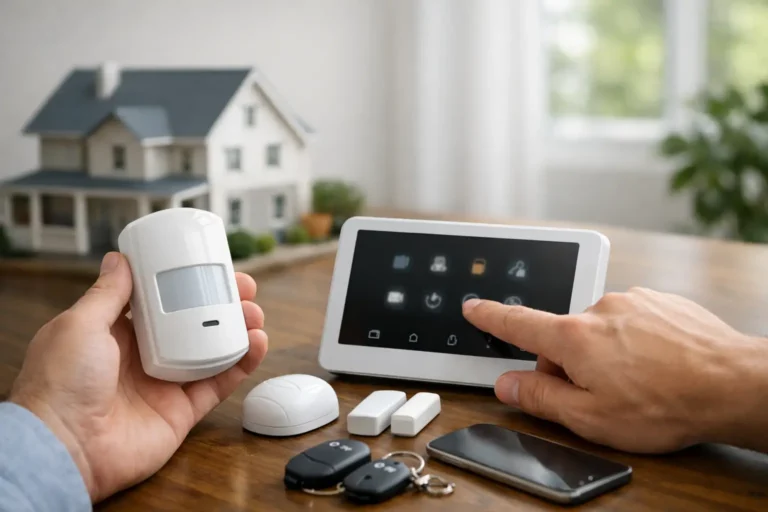
Intrusion protection is the foundation. Door contacts, window sensors, glass break detectors, and motion sensors create the basic layer that detects unauthorized entry. For many homes, that is the right starting point. If you are choosing between broad coverage and a long list of add-ons, broad coverage usually matters more.
Cameras add visibility, but they are not a replacement for an alarm. A camera may show you what happened. A monitored alarm can trigger a fast response when something is happening. That difference matters, especially when you are at work, asleep, or out of town.
Fire and life safety devices are often overlooked during the buying process. Smoke detection, carbon monoxide detection, and flood sensors can protect your home from more common threats than break-ins. If you want a system that supports real peace of mind, these options deserve consideration.
Automation is useful when it serves a purpose. Smart locks, lights, garage door control, and thermostat integration can make daily life easier and help your home appear occupied. But automation should support security, not distract from it.
Professional monitoring or self-monitoring?
This is one of the biggest decisions in how to choose home alarm service. Self-monitoring usually means your phone receives alerts and you decide what to do next. Professionally monitored service means a monitoring center can respond when an alarm is triggered, even if you miss the notification.
Self-monitoring can seem appealing because it may look less expensive upfront. The trade-off is that it depends on your availability, your phone, your internet connection, and your ability to assess the situation quickly. If you are in a meeting, on a flight, or asleep, there may be a delay.
Professional monitoring offers another layer of support. For many homeowners, that support is the point of having a security system in the first place. You are not relying on yourself alone to catch every alert at the right time. That can be especially valuable for families, older adults, second homes, and households with frequent travel.
Why installation matters more than many homeowners expect
A good security system is only as good as its design and setup. Sensor placement, signal reliability, device programming, camera angles, and user training all affect how well the system performs.
DIY systems have a place, especially for smaller spaces or temporary living situations. But they also shift the burden onto the homeowner. You are responsible for deciding what equipment to buy, where to place it, how to test it, and how to troubleshoot it when something is not working right.
Professional installation reduces those gaps. A trained installer can spot vulnerabilities, recommend the right mix of equipment, and make sure the system is configured for the way your household actually lives. That usually means fewer false alarms, better coverage, and less frustration over time.
For Louisiana homeowners, local knowledge also matters. Weather, power outages, humidity, and property layout can all affect system performance and planning. A provider with experience in the area can account for those realities in ways a one-size-fits-all approach may not.
Compare providers, not just products
When people compare alarm systems, they often focus on devices and monthly pricing. Those matter, but the provider matters just as much. You are not only buying equipment. You are choosing who will install it, monitor it, service it, and answer when you need help.
Ask how the provider handles service after installation. Do they offer real customer support, or are you routed through a national call chain? Can they help with upgrades as your needs change? Will they explain the system clearly so every adult in the home knows how to use it?
Reputation is another strong signal. A company with deep local experience and a long track record has likely handled a wide range of properties, family needs, and service situations. That kind of consistency matters more than flashy promotions.
This is where a local company can stand apart. Alarm Center Security has served Louisiana communities for decades, and that local experience shows up in system design, responsive support, and practical recommendations that fit the home in front of them rather than a generic package.
How to choose a home alarm system without overbuying
Many homeowners worry about choosing too little protection. Just as many end up paying for features they never use. The right balance usually comes from asking a few honest questions.
Do you want to secure the home primarily while you are away, while you are sleeping, or both? Do you want to see live video, or would event clips be enough? Do you want to control the system from your phone every day, or do you mostly want dependable protection in the background?
If your priorities are clear, it becomes easier to avoid overbuying. A well-designed system with key entry points protected, a few strategic cameras, and professional monitoring will often serve a family better than a crowded package full of extras no one uses.
Budget should be part of the conversation, but not the only one. A lower initial price can be offset by poor support, limited coverage, or equipment that does not adapt well as your needs change. It is worth thinking about long-term value, not only the first invoice.
Questions worth asking before you commit
Before you say yes to any system, ask who owns the equipment, what the monitoring terms are, how service calls are handled, and whether the system can grow with your home. If you add cameras later, finish a bonus room, or want smart locks down the road, you should know whether the platform can support those upgrades.
It also helps to ask how the system works during internet outages or power interruptions. Backup power and communication options can make a major difference in reliability. These details are easy to miss during a sales conversation, but they matter when conditions are not ideal.
Finally, make sure the system feels manageable. If it is confusing to arm, difficult to check, or too complicated for everyone in the home to use properly, that creates risk. Security should feel dependable, not stressful.
Choosing a home alarm system should leave you feeling more confident, not more confused. The right provider will help you think through your home, your routine, and your priorities without pushing a package that does not fit. Good protection starts with a clear plan, and peace of mind usually follows when the system is built around real life.