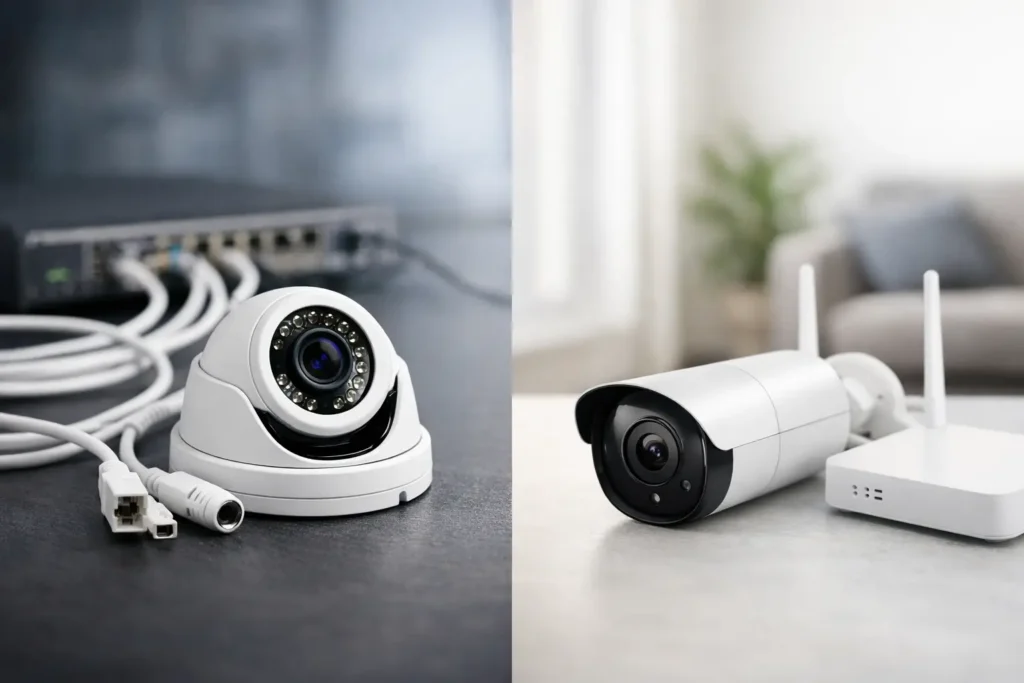
If you are weighing wired vs wireless security, the right answer usually comes down to your property, your daily routine, and how much flexibility you want after installation. A large business with fixed operations may need something very different from a family upgrading an older home in Louisiana. That is why the best security system is not the one with the flashiest features. It is the one that fits how you live or work.
For many property owners, the choice sounds simple at first. Wired systems are often seen as stronger and more permanent, while wireless systems are known for convenience and smart control. Both ideas are partly true, but neither tells the whole story. Real performance depends on layout, construction, internet availability, power backup, monitoring, and the quality of the installation.
Wired vs wireless security for homes and businesses
A wired security system connects devices like door contacts, motion detectors, keypads, cameras, and alarm panels through physical cabling. In many cases, that wiring is installed inside walls, ceilings, or attic spaces. This approach is common in new construction, major remodels, and commercial spaces where long-term infrastructure matters.
A wireless system uses radio signals to connect sensors and devices back to the control panel or hub. Many modern wireless systems still use professional equipment, monitored service, and mobile app control. Wireless does not mean limited. In fact, for many homes and small businesses, it can provide a very capable level of protection with less disruption during installation.
The question is not whether one is universally better. The question is which setup makes more sense for your property today, and which one will still make sense a few years from now.
Where wired security has the advantage
Wired security has a strong reputation for reliability because physical connections are stable and less dependent on battery-powered sensors. Once installed properly, wired devices can perform consistently for years with less sensor-level maintenance. That can be a major benefit for commercial buildings, larger properties, and owners who want a more permanent security foundation.
Wired systems also make sense when a property is under construction. Running cable before walls are closed gives you more options for clean placement and long-term expansion. If you are building a new home, adding structured wiring early can support intrusion protection, surveillance, access control, and smart features in a more organized way.
For businesses, wired security is often attractive when equipment needs to cover multiple entry points, large square footage, or specialized areas. Warehouses, offices, retail spaces, and mixed-use buildings may benefit from a hardwired backbone, especially when daily operations depend on dependable reporting and consistent device communication.
That said, wired systems come with trade-offs. Installation is more labor-intensive. In an existing home or occupied business, running wires may require drilling, attic access, wall fishing, or surface-mounted solutions in some areas. That can increase installation time and cost. It also makes future changes less simple if you remodel, move walls, or want to relocate sensors later.
Where wireless security stands out
Wireless security is popular for a reason. It is faster to install, easier to adapt, and often better suited for existing homes and light commercial properties. If your goal is to add protection without opening walls or interrupting business for days, wireless can be the practical choice.
This flexibility matters more than many people expect. Homeowners may decide later to add cameras, a smart lock, a video doorbell, glass break detection, or automation features. Business owners may want to secure a back office, stock room, or secondary entrance after operations change. Wireless equipment usually makes those updates easier.
Wireless systems also pair well with remote access tools. Many customers want to arm and disarm from a phone, check cameras while away, receive alerts, and manage user codes without standing at a keypad. Those features are now common in professionally installed systems, and wireless platforms often make them simple for everyday use.
The main consideration with wireless equipment is maintenance. Sensors typically rely on batteries, so periodic battery replacement is part of ownership. Signal strength also needs to be evaluated carefully, especially in larger buildings or properties with heavy materials that can affect communication. A professionally designed system helps avoid weak spots and device placement issues.
Reliability is about more than wiring
When people compare wired vs wireless security, reliability is usually the biggest concern. That makes sense. You want a system that works when you need it most.
But reliability is not only about how a sensor connects. It also depends on professional installation, quality equipment, backup power, communication methods, monitoring, and ongoing service. A poorly planned wired system can still underperform. A well-designed wireless system can be highly dependable.
Power outages are a good example. A security panel with battery backup can keep the system operating even when electricity goes out. Communication backup matters too. If internet service drops, a system with cellular communication can still send signals to the monitoring center. For Louisiana homes and businesses that deal with storms and changing conditions, those details matter just as much as whether the sensor itself is wired or wireless.
Cost depends on the building, not just the equipment
Some buyers assume wireless always costs less, while wired always costs more. That is often true at the start, but not in every case.
In an existing property, wireless can reduce labor costs because installation is less invasive. That often makes it a smart option for retrofits. In new construction, however, pre-wiring can be very cost-effective because the infrastructure is added before the building is finished. Over time, a wired system may also reduce some device-level maintenance because many components do not depend on batteries in the same way wireless sensors do.
The better way to think about cost is total value. What are you protecting? How long will you stay in the building? Do you expect to expand the system? Do you want smart automation, video verification, remote access, or integrated monitoring? Those answers shape the real investment more than the wired-versus-wireless label alone.
Which option is better for your situation?
For many homeowners, wireless security is the better fit when the house is already finished, the family wants app-based control, and future flexibility is important. It works especially well when you want a professionally installed system without a major construction project.
For new homes, larger custom residences, and major renovations, wired security deserves serious consideration. If walls are open and you are planning long-term, hardwired infrastructure can give you a clean, durable foundation.
For small and midsize businesses, the choice usually depends on layout and operations. A small office or storefront may do very well with wireless or a hybrid system. A larger facility with multiple zones, specialized access needs, or long-term occupancy may benefit from more hardwired components.
That brings up an option many people overlook: hybrid systems. In real-world installations, the best answer is often a mix of both. A property may use wired components where permanent coverage makes sense and wireless devices where flexibility is more valuable. This approach can balance reliability, convenience, and budget without forcing a one-size-fits-all decision.
Why professional design matters
Security is not just about buying devices. It is about making sure the right devices are placed in the right locations and supported by dependable monitoring and service. That is where local experience matters.
A professional security company should evaluate entry points, building materials, traffic flow, daily routines, and the risks that matter most to you. A family may be focused on front-door awareness, garage access, and mobile alerts. A business may need opening and closing reports, employee code management, video coverage, and after-hours protection. The system should reflect those priorities instead of forcing you into a generic package.
For Louisiana property owners, it also helps to work with a provider that understands local conditions, responds quickly when support is needed, and can help you adapt the system over time. Alarm Center Security has worked with homeowners and businesses across the region for decades, and that kind of hands-on guidance can make the decision much clearer.
If you are choosing between wired vs wireless security, start with the property and the people using it every day. The best system is the one that protects your space reliably, fits your routine, and can grow with your needs. A good security plan should feel dependable from day one and still make sense long after the installation is done.