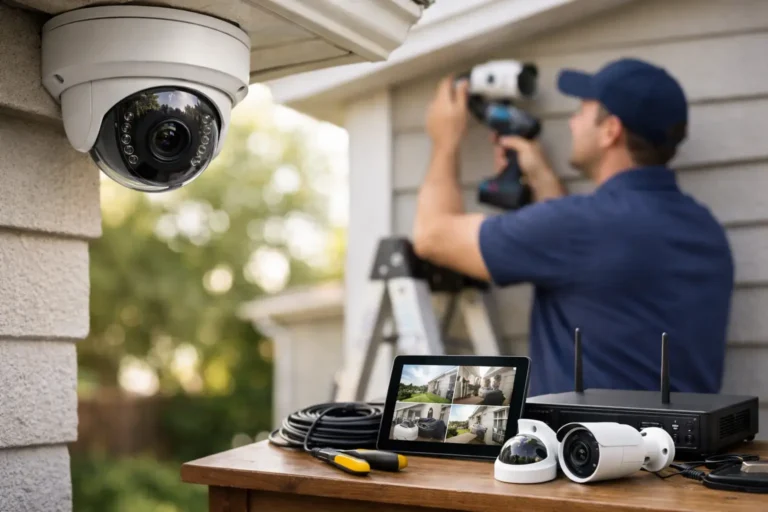
A camera over the front door sounds simple until you realize the package drop happens at the garage, the side gate stays hidden at night, and the backyard has one dark corner no single lens can cover. That is where smart home security camera system installation makes the difference. The goal is not just to put cameras on walls. It is to build coverage that fits how your home is used, where people move, and what actually needs to be seen when it matters.
For many Louisiana homeowners, that starts with a practical question: should you install a few cameras and hope for the best, or plan a complete system that works with your home security and daily routine? A well-designed system gives you more than video. It gives you visibility at entry points, better awareness after dark, mobile access when you are away, and a clear record if something goes wrong.
What good home security camera system installation really includes
The biggest misconception is that camera installation is mainly about equipment. In reality, design comes first. A dependable system begins with the property layout, lighting conditions, internet reliability, entry points, and whether the homeowner wants cameras to work alongside alarms, smart locks, and app-based alerts.
A front porch camera may help with deliveries and visitors, but it will not tell you what is happening at a back patio door or detached garage. Wide-angle views are useful, but they can sacrifice detail at a distance. Narrower views often capture faces and license plates better, but they cover less area. Every installation involves trade-offs, which is why camera selection and placement should match the risks on the property instead of following a one-size-fits-all plan.
Professional installation also looks beyond daytime performance. Glare from afternoon sun, reflections off windows, heavy rain, and low light can all affect image quality. In South Louisiana, weather matters. Heat, humidity, and storms can shorten the life of poorly placed or improperly protected equipment. A professionally installed system accounts for those conditions from the start.
Where cameras should go first
Most homes do not need a camera pointed at every square foot of the property. They need clear coverage of the places that matter most. For many households, that means the front door, driveway, garage, back door, and any side access point that is partially hidden from the street.
The right placement depends on the home. A two-story house with multiple approaches may need overlapping views so blind spots do not develop. A smaller home may need fewer devices, but each one has to be positioned carefully to avoid missing the main path of travel. Indoor cameras can also be useful in common areas, especially for homeowners who want to check on children coming home from school, aging relatives, or service visits while they are away.
Height matters as much as location. A camera mounted too high may capture the top of a person’s head instead of a face. Mounted too low, it can be easier to tamper with and may pick up too much glare from headlights or porch lights. Good placement is part visibility, part deterrence, and part practical field testing.
Outdoor, indoor, and doorbell cameras each serve a different purpose
Outdoor cameras are usually the backbone of a residential system because they cover perimeter activity before someone reaches the house. Indoor cameras add awareness once someone is inside, but many families prefer to limit indoor use to specific areas for privacy reasons. Doorbell cameras serve a narrower role, yet they can be extremely useful for front-door activity, missed visitors, and package monitoring.
The best systems often combine these camera types rather than relying on one to do everything. A doorbell camera is not a substitute for driveway coverage. An indoor camera does not replace backyard visibility. Matching camera type to the job is what makes the overall system stronger.
Why wiring, power, and connectivity matter
When homeowners compare systems, image quality usually gets the attention. What keeps the system dependable, though, is infrastructure. Cameras need stable power, consistent connectivity, and recording that does not fail when you need it most.
Wireless cameras can be a good fit in some homes, especially where running cable would be difficult. They can also be faster to deploy. But wireless does not always mean worry-free. Battery maintenance, Wi-Fi dead zones, and signal interference can create weak spots. Wired cameras usually offer more consistent performance and can be the better choice for long-term reliability, especially on larger properties or homes where constant recording is important.
Storage is another decision that deserves more attention than it usually gets. Some homeowners prefer cloud access for convenience. Others want local recording for retention and control. In many cases, a hybrid approach makes sense. The right answer depends on how long you want to keep footage, how often you review video, and whether the system needs to support future expansion.
Integration can make the system easier to use
A camera system works better when it is part of a bigger security plan. If video clips, motion alerts, alarm events, and smart home controls all live in one app, the system becomes easier to manage day to day. That matters because convenience affects whether people actually use the technology they pay for.
For example, if a camera detects motion near a side door, you may want lights to activate automatically or alerts to appear alongside other security notifications. Integration also helps homeowners manage routines when they are traveling, checking in on kids after school, or verifying that a garage door was closed for the night.
DIY can work, but it has limits
Some homeowners are comfortable installing a basic camera or doorbell device on their own. For a small, simple setup, that may be enough. But a full home security camera system installation often involves more than mounting hardware and downloading an app.
Coverage gaps are common in DIY setups. So are weak Wi-Fi connections, poor night visibility, false alerts from bad angles, and frustration over settings that were never configured correctly. Homeowners may save money upfront, but they can end up with a system that does not perform well when a real incident happens.
Professional installation reduces those risks. It also gives homeowners guidance on camera placement, recording settings, app training, and future upgrades. That support matters after installation too. Security systems are not static. Needs change. Families move. Additions get built. Equipment ages. It helps to have a local team that can adjust the system instead of leaving you to troubleshoot everything alone.
What to expect from a professional installation process
A strong installation process usually starts with a conversation about the property, daily routines, priorities, and budget. Some homeowners want strong perimeter visibility and remote access. Others are more concerned about package theft, garage activity, or knowing when children arrive home. The system should reflect those priorities.
From there, the installer evaluates the layout, identifies blind spots, and recommends camera locations that balance visibility, detail, deterrence, and appearance. Equipment selection should fit the property rather than overloading it with devices that add little value. More cameras do not always mean better protection.
Installation day should include proper mounting, clean wiring where needed, network setup, testing, and user walkthroughs. Homeowners should understand how to view live video, review clips, manage alerts, and know what to do if they need service. At Alarm Center Security, that local, hands-on support is a major part of the value. Customers are not just getting hardware. They are getting a system designed for the way they live and support from a team that knows Louisiana homes and businesses.
Choosing a system that still makes sense three years from now
It is easy to shop for cameras based on a single feature like resolution. A better approach is to think about how the system will hold up over time. Can it expand if you add a detached workshop, gate, or pool area? Will it integrate with a monitored alarm system later if your needs change? Is the mobile experience simple enough that every adult in the home will actually use it?
The best system is usually not the flashiest one. It is the one that covers your real risks, fits your property, works reliably in local conditions, and comes with support when you need changes or service. That is especially true for families who want peace of mind without becoming part-time security technicians.
If you are considering home security camera system installation, start with the problem you want solved, not the camera you saw advertised. A good plan creates better protection than a box of features ever will, and the right setup can make your home feel safer every day, not just after something happens.