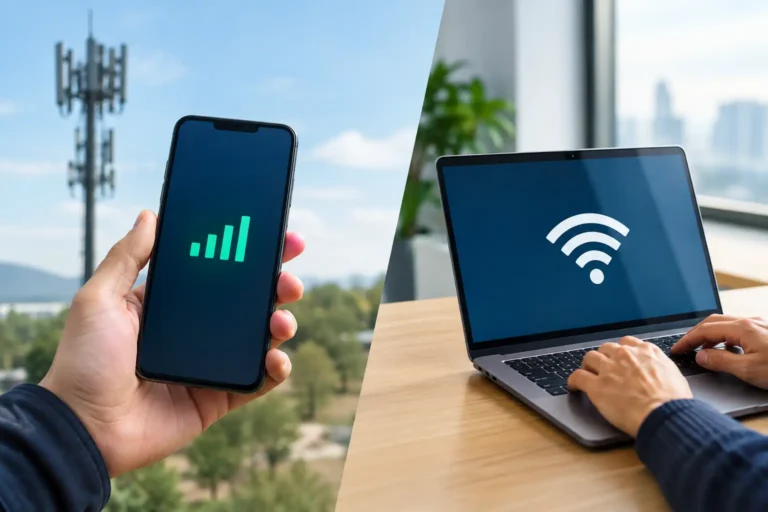
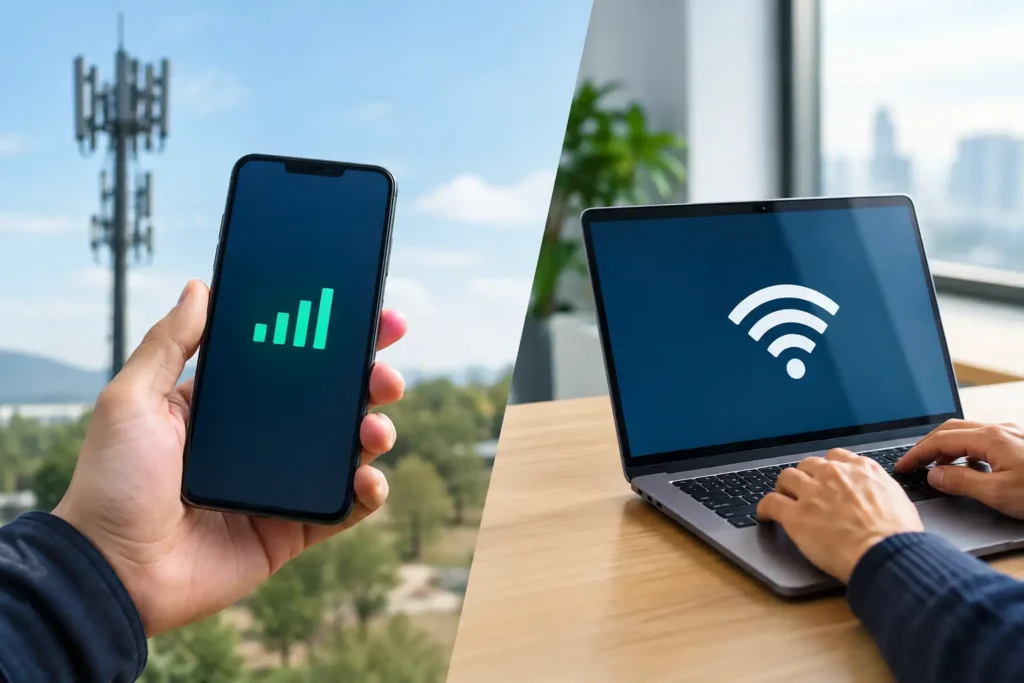
When a storm knocks out power, a burglar cuts an exterior cable, or your internet service goes down without warning, your alarm system still needs a way to reach the monitoring center. That is the practical difference at the center of cellular versus broadband monitoring. Both can support professional alarm monitoring, but they use different communication paths, carry different risks, and may suit different homes and businesses.
For Louisiana property owners, reliability is not an abstract feature. Heavy rain, hurricanes, construction activity, utility interruptions, and changing internet equipment can all affect how connected devices perform. Choosing the right alarm communication method starts with understanding what happens between your security system and the people responsible for responding to an alarm.
What Cellular Versus Broadband Monitoring Means
Your security panel does more than sound a siren. When it detects an intrusion, fire, environmental hazard, or other programmed event, it sends a signal to a professional monitoring center. The monitoring team follows the response plan for your account, which may include contacting you, designated contacts, or emergency services when appropriate.
Broadband and cellular monitoring describe the connection that carries that signal.
Broadband monitoring uses your internet connection
Broadband monitoring sends alarm signals through your home or business internet service. It is typically connected through a router or network equipment, either by Ethernet cable or a supported wireless connection. Because most properties already have internet service, broadband can be a convenient and cost-conscious way to connect a security system.
When the internet connection is stable and powered, broadband monitoring is fast and effective. It can work well for customers who have dependable internet service and want a monitored system tied to their existing network.
The limitation is that broadband depends on more equipment than the alarm panel alone. A modem, router, network cabling, internet service, and electrical power may all need to be working. Battery backup can help keep security and network equipment running during a short outage, but the backup time is finite and varies by system.
Cellular monitoring uses a wireless network
Cellular monitoring sends alarm signals over a cellular network, much like a mobile phone communicates without using your home Wi-Fi. The alarm panel uses a dedicated cellular communicator, so the monitoring connection does not rely on your router, cable line, fiber service, or local internet provider.
This independence is the main reason many homeowners and business operators choose cellular monitoring. If the internet is down or a phone or cable line is damaged, the system may still communicate as long as the panel has power or battery backup and cellular service is available.
Cellular service is not immune to every issue. Signal strength, local network coverage, panel placement, and extended widespread emergencies can affect performance. A professional site assessment helps identify whether cellular coverage is appropriate at the property before the system is installed.
Why Communication Reliability Matters
An alarm system is only as useful as its ability to report a real event. Local sirens can alert people nearby, but they do not guarantee that someone will hear them or act quickly. Professional monitoring adds another layer of protection by making sure an alarm event is received and handled according to the plan you establish.
Broadband service can be reliable under normal conditions, but it creates a shared point of dependence. If an intruder disables an accessible communication line, if the internet provider experiences an outage, or if a router fails, a broadband-only alarm connection may not be able to send a signal.
Cellular monitoring avoids many of those local connection failures. That can be especially valuable for vacant properties, homes where residents travel often, businesses with valuable inventory, and locations where a delayed alarm response could have serious consequences.
For many customers, the strongest arrangement is not an either-or decision. A professionally designed system may use broadband as a primary path and cellular as a backup path, or cellular as the primary path with other available communication options. The right design depends on the property, the equipment, the local network environment, and the level of protection you want.
Comparing Costs and Day-to-Day Convenience
Broadband monitoring may have a lower monthly communication cost because it uses internet service you already pay for. However, the apparent savings should be weighed against the need for dependable equipment, network maintenance, and backup power. Replacing an aging router or changing internet providers can require updates to connected devices.
Cellular monitoring generally includes a recurring communication charge because the alarm panel uses a managed cellular connection. That monthly cost supports a communication path that is separate from your home or business internet. For many customers, that added independence is worth the investment in peace of mind.
Convenience also matters. Internet-connected smart security features can allow you to check system status, receive activity alerts, arm or disarm remotely, view supported camera footage, and manage authorized users. Those features may use your property internet connection for everyday app access, even when the alarm panel itself has cellular backup for critical alarm reporting.
This is why it helps to separate two questions: How will you use your security system day to day, and how will it communicate during a problem? A good plan accounts for both.
Which Option Fits Your Property?
A broadband-only connection can make sense for a lower-risk property with stable internet service, reliable backup power, and a customer who understands the dependency on network equipment. It may also be appropriate where cellular coverage is limited and another communication method is needed.
Cellular monitoring is often a strong fit for homeowners who want their alarm system to remain connected when Wi-Fi fails. It is also useful for second homes, rental properties, detached garages, and other locations where internet service may be inconsistent or not actively managed.
For businesses, cellular monitoring can help protect locations that cannot afford to lose communication during an internet outage. Retail stores, offices, warehouses, medical practices, and service businesses may need dependable intrusion reporting, opening and closing activity, access visibility, and remote control of their security system. A separate cellular path helps reduce reliance on the same network used by point-of-sale systems, employee devices, and daily operations.
New construction is another situation where planning ahead pays off. Before walls are closed and equipment locations are finalized, a security professional can consider panel placement, electrical backup, cellular signal, camera coverage, network needs, and future expansion. That preparation can prevent costly changes later.
Professional Installation Makes the Difference
Monitoring technology works best when it is matched to the property rather than selected from a box. A professional installer can test conditions at the location, place the panel where it is practical and protected, confirm communication paths, and make sure the account has accurate contacts and response instructions.
They can also explain what your system will do during a power outage. Most professionally installed alarm panels include battery backup, but runtime varies based on the equipment, its age, and the number of connected devices. Broadband equipment may need its own backup power source if you want it to continue operating during an outage.
At Alarm Center Security, that local, hands-on approach matters. Since 1985, the company has helped Louisiana homeowners and businesses build protection plans around their actual property and daily routines, not a one-size-fits-all package.
Questions to Ask Before You Choose
Before selecting cellular, broadband, or a combination of both, ask how the system reports if your internet service fails, how long the alarm panel and network equipment can operate on battery power, and whether cellular signal has been evaluated at the property. You should also ask what alerts you can receive remotely, who can manage users and codes, and how service calls or future upgrades are handled.
If you operate a business, discuss opening and closing schedules, employee access needs, after-hours procedures, camera coverage, and the contacts who should be called for different types of events. A monitoring plan should support your operation without creating unnecessary work for your team.
The best connection is the one that keeps your property protected when ordinary systems are not working as expected. A local security professional can evaluate your home or business, explain the trade-offs clearly, and help you choose monitoring that gives your family, employees, and property the dependable support they deserve. Request a free estimate to start with a plan built for your Louisiana property.